
Subfamily MYRMICINAE Author: Joe A. MacGown |
||
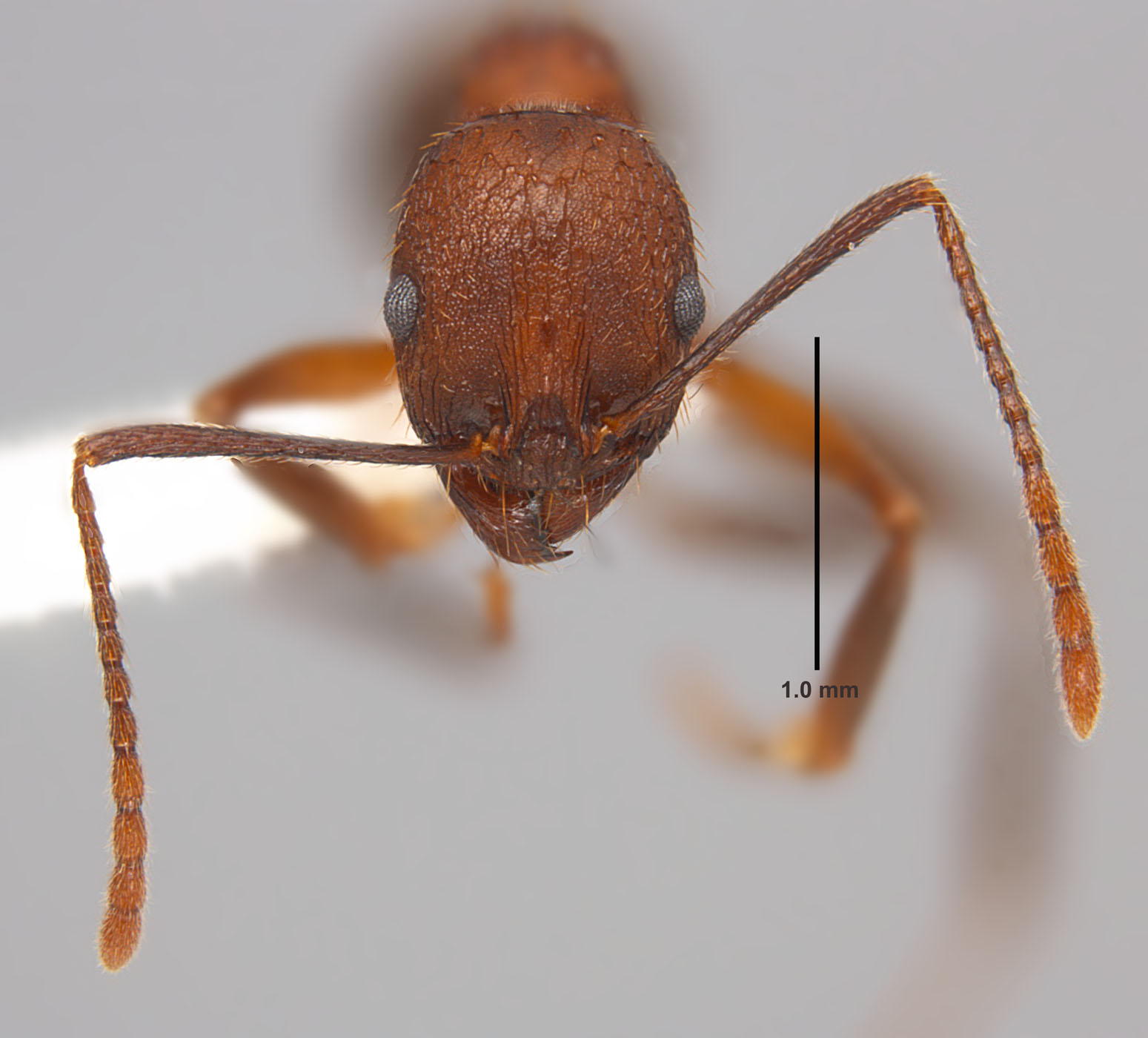 Aphaenogaster fulva, full face view of worker (MISS, Lauderdale Co.). (photo by Ryan Whitehouse and Joe A. MacGown)
|
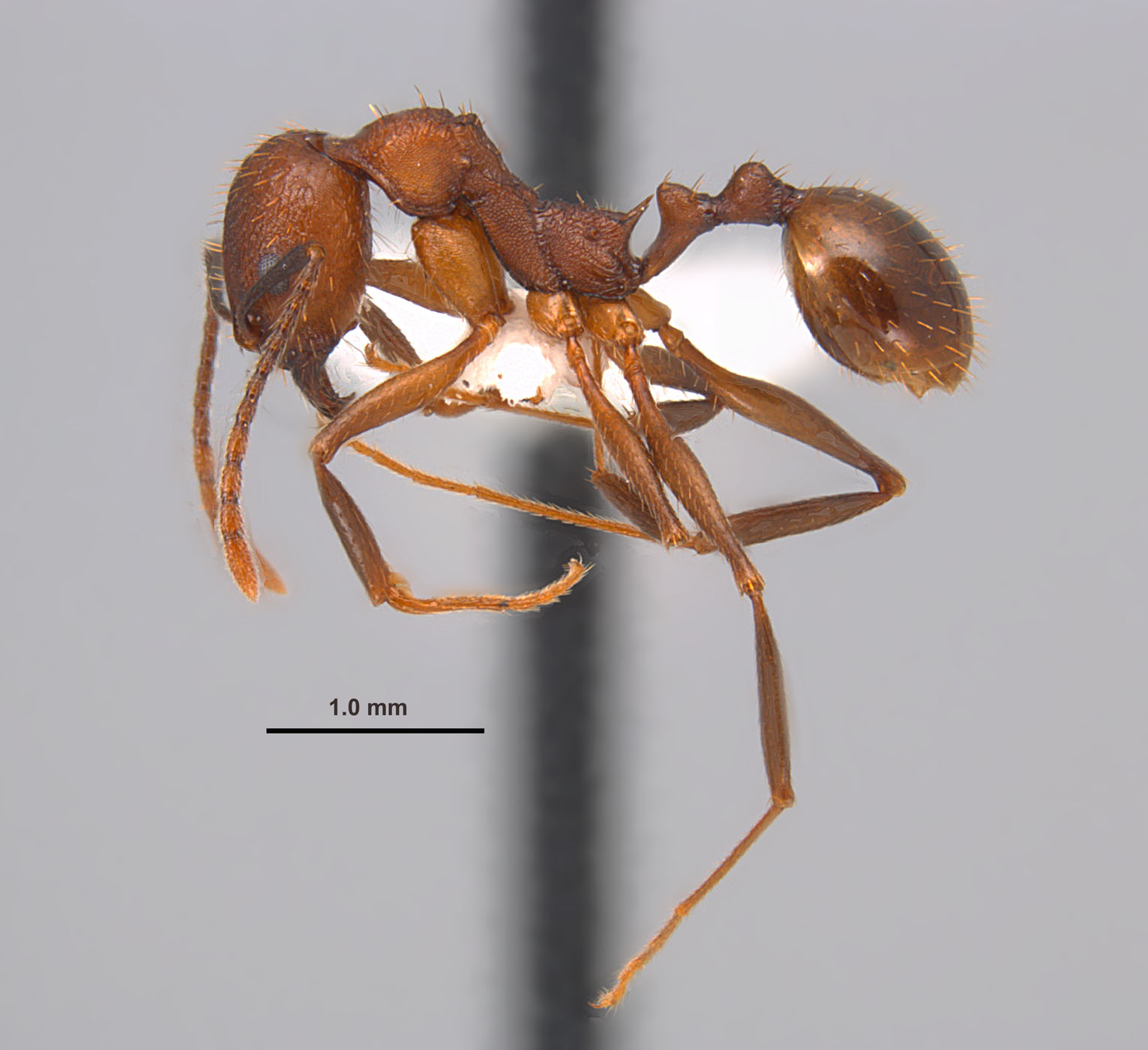 Aphaenogaster fulva, lateral view of worker (MISS, Lauderdale Co.). (photo by Ryan Whitehouse and Joe A. MacGown) |
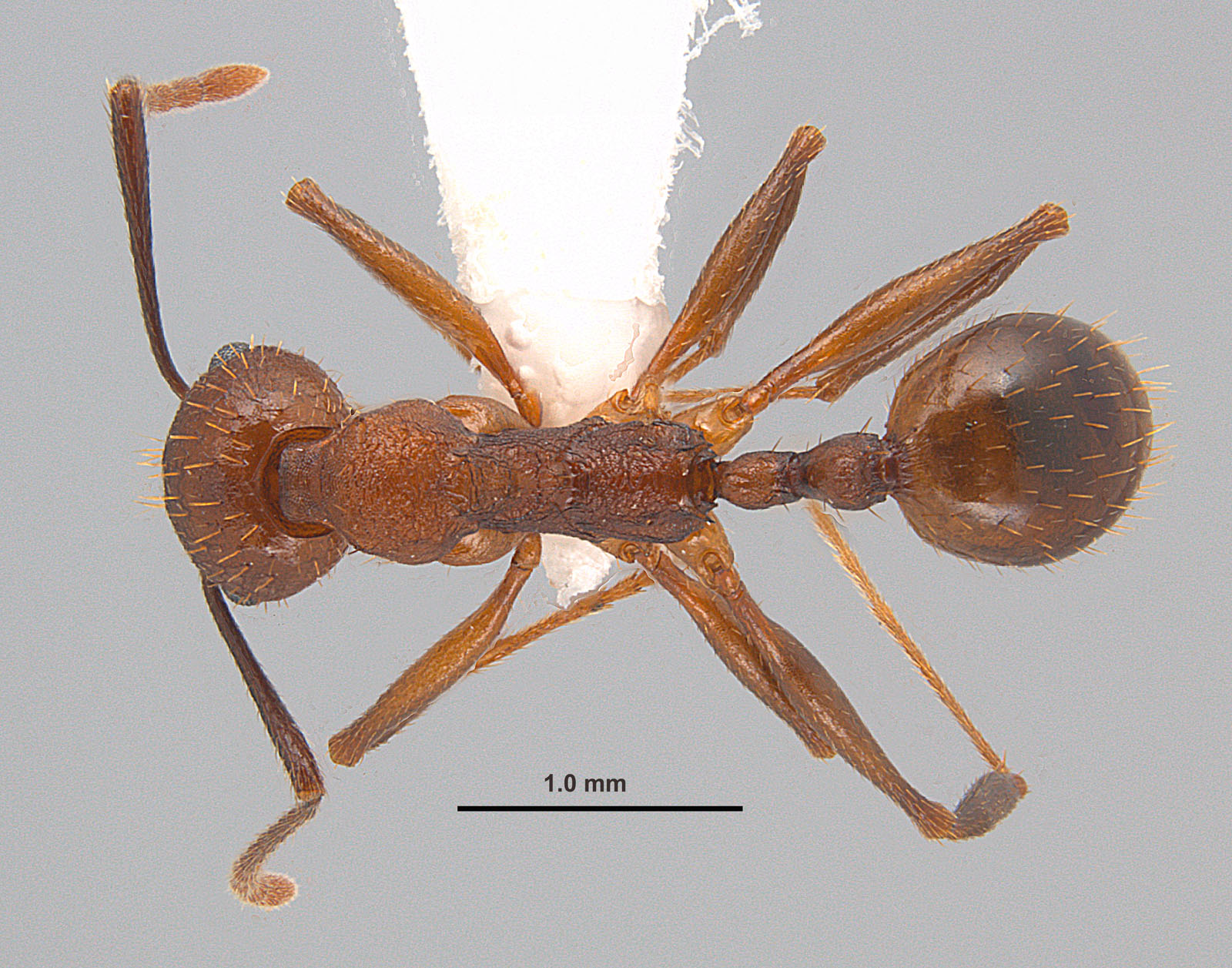 Aphaenogaster fulva, dorsal view of worker (MISS, Lauderdale Co.). (photo by Ryan Whitehouse and Joe A. MacGown) |

Aphaenogaster fulva, full face view of queen (MISS, Winston Co.). (photo by Joe A. MacGown) |
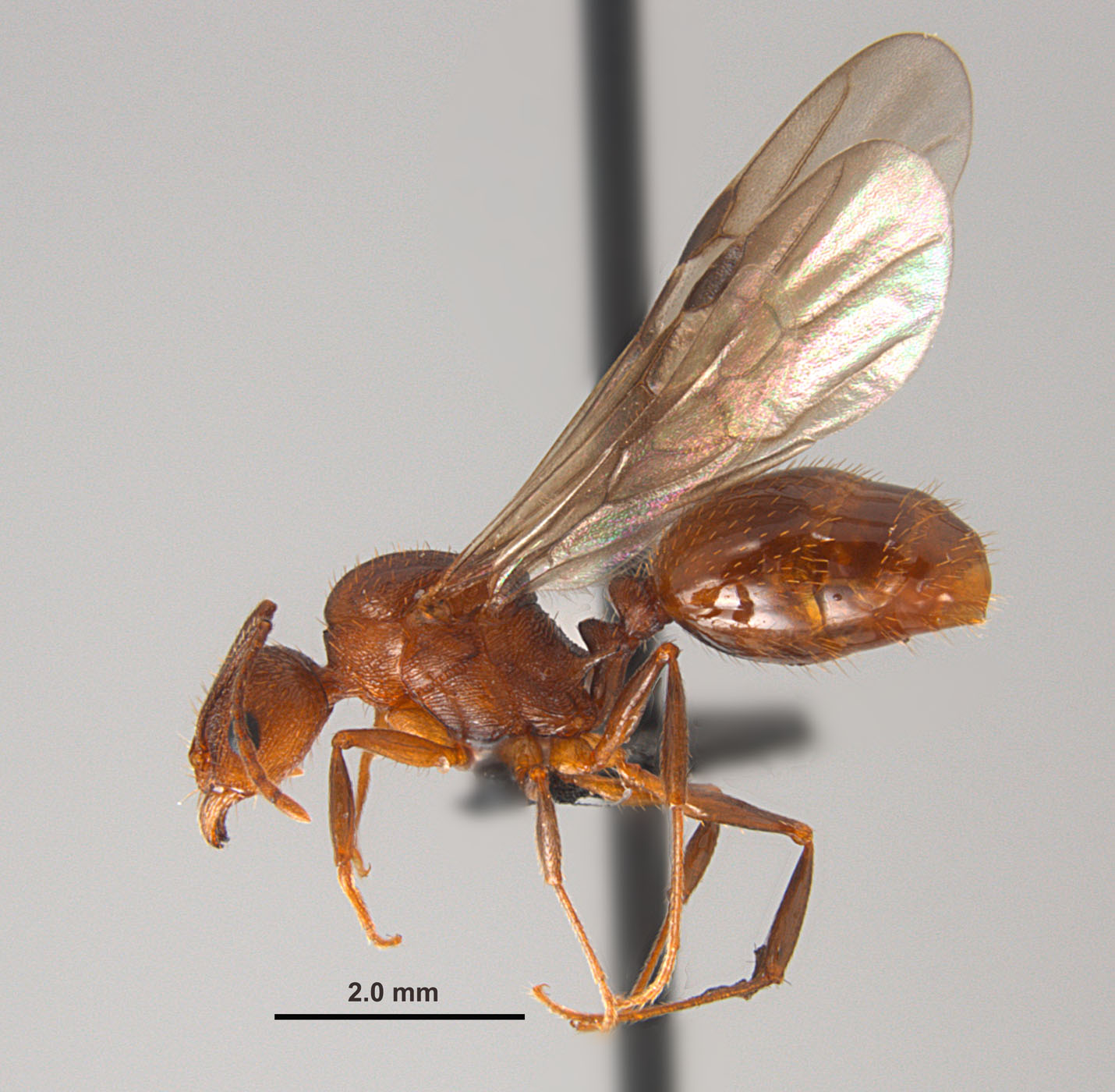 Aphaenogaster fulva, lateral view of alate queen (MISS, Winston Co.). (photo by Joe A. MacGown) |
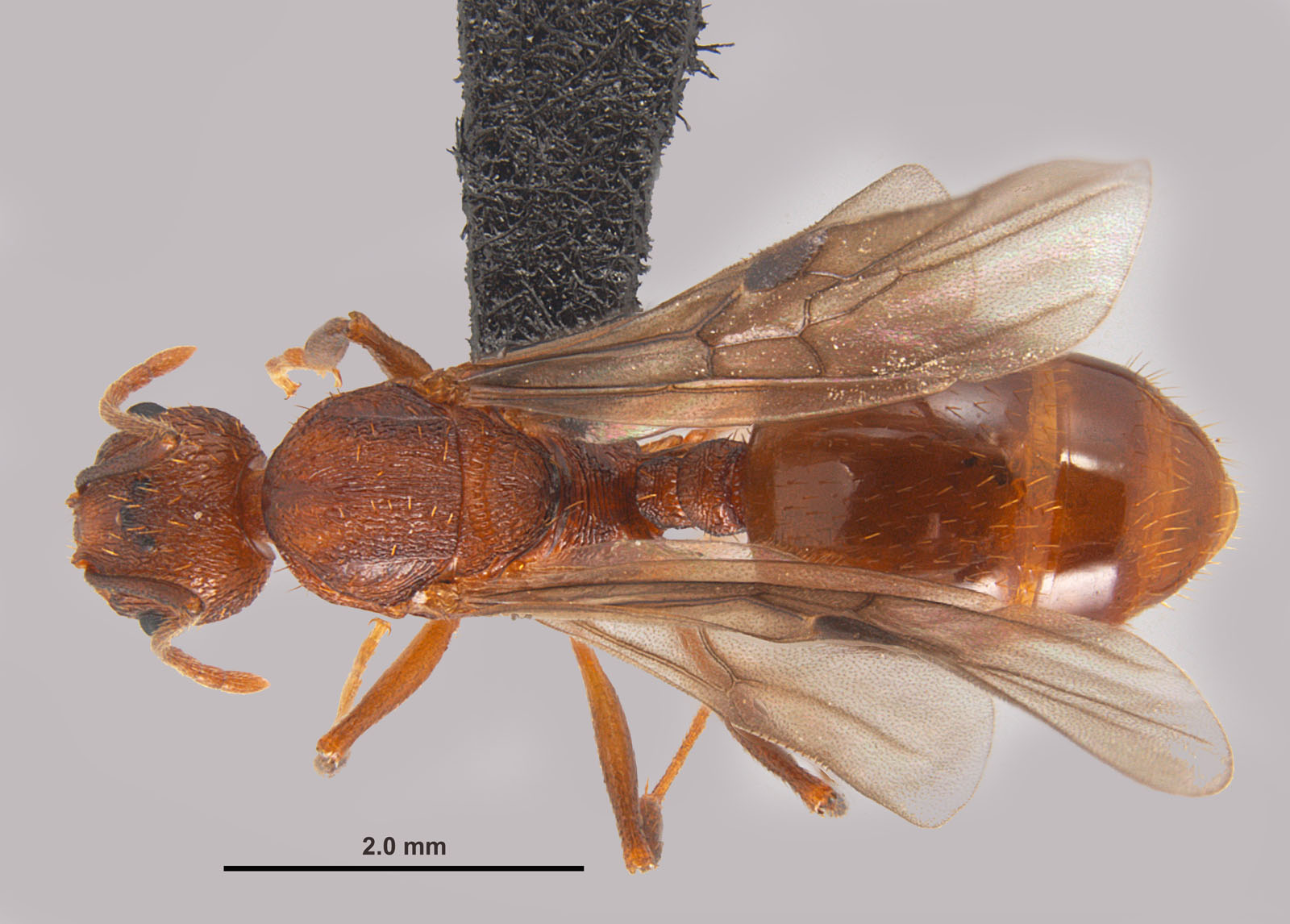 Aphaenogaster fulva, dorsal view of alate queen (MISS, Winston Co.). (photo by Joe A. MacGown) |
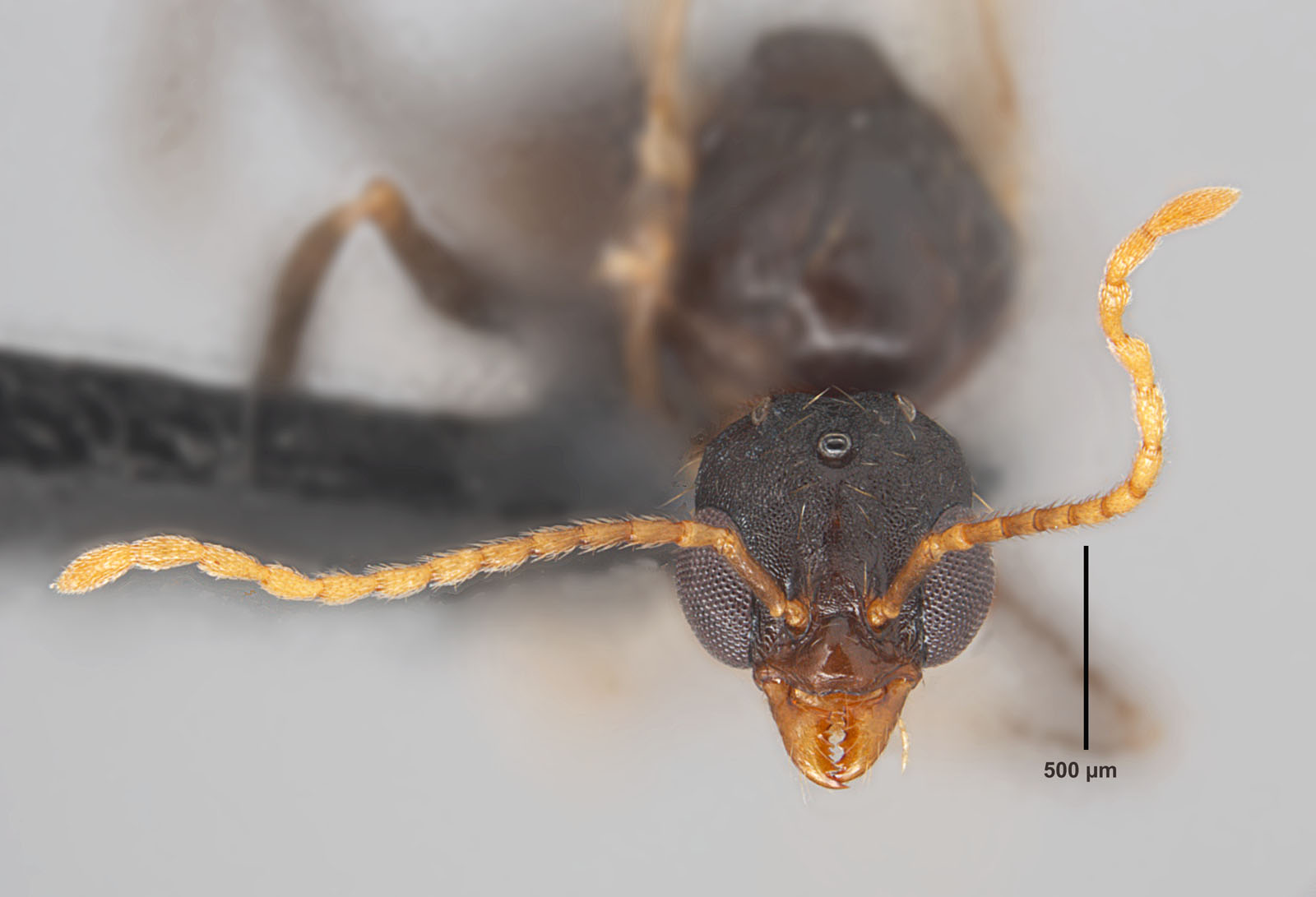
Aphaenogaster fulva, full face view of male (MISS, Winston Co.). (photo by Joe A. MacGown) |
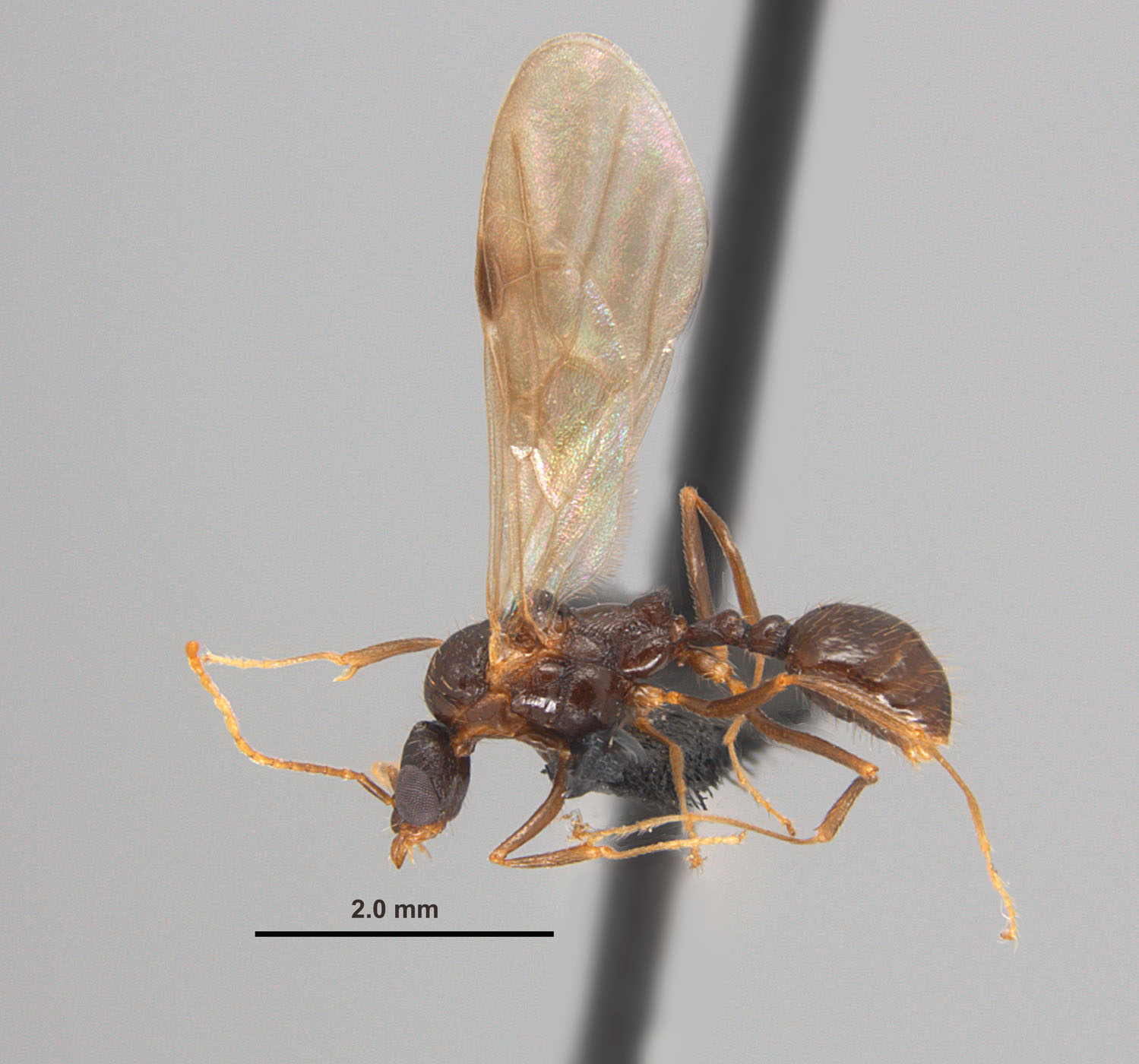 Aphaenogaster fulva, lateral view of alate male (MISS, Winston Co.). (photo by Joe A. MacGown) |
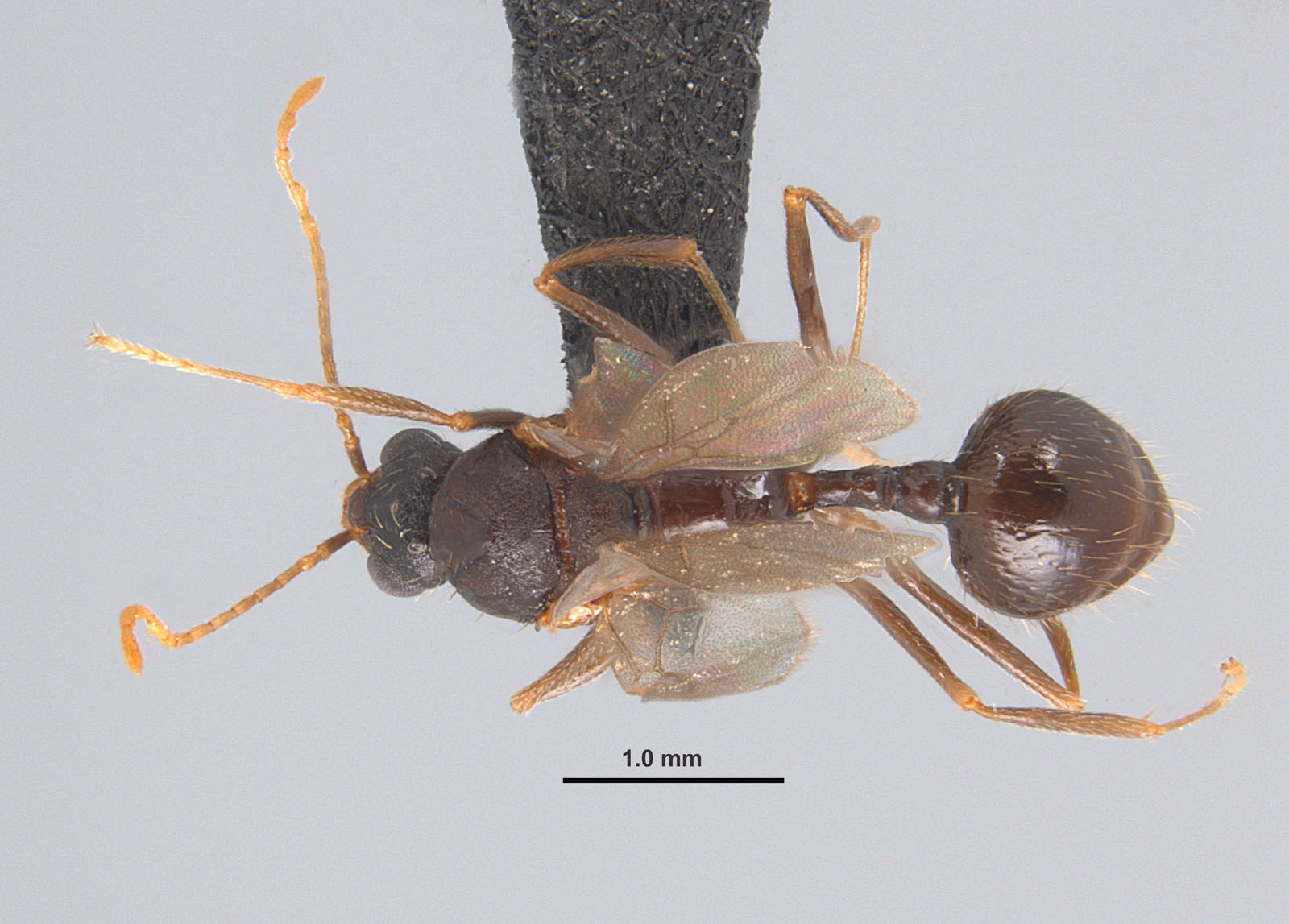 Aphaenogaster fulva, dorsal view of alate male (MISS, Winston Co.). (photo by Joe A. MacGown) |
 |
||
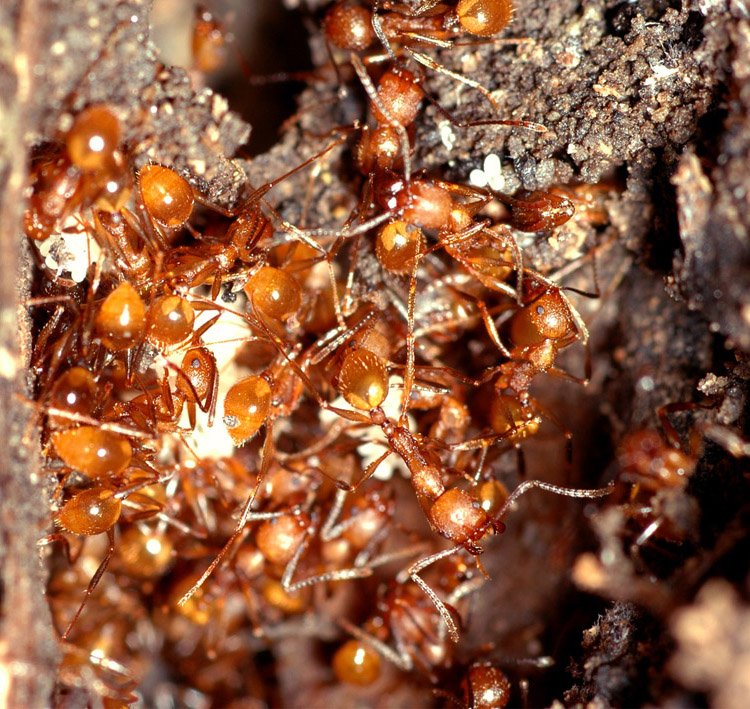
Aphaenogaster fulva, colony in rotting log. |
||
Introduction Diagnosis.Worker: Slender, medium sized (TL ≈ 3.5–5.0 mm); entire body including appendages dark brown; head and mesosoma with reticulate and punctate sculpture, coxae with transverse striae, gaster smooth and shiny; entire body with scattered (more abundant on head and gaster) erect, brownish setae; appressed pubescence sparse on entire body. Head longer than wide; somewhat ovate, slightly convex posteriorly, low occipital carina present; mandibles triangular, apical tooth elongate, followed by 1–2 shorter teeth and 6–7 denticles; frontal carina not covering antennal bases; scape not bent at base, scapes surpassing posterior margin of head about ¼ of its length; 12 antennomeres, apical four antennomeres forming a loose club. Mesosoma not entire (in profile view), mesonotum abruptly elevated above the level of the pronotum and typically concave in the middle (as seen from front to back), metanotal suture distinct, with transverse striae; propodeal dorsum flat and longer than declivity, declivity steep, near 90°; propodeal spines elongate, directed upward; legs long, mid and hind tibia with a single simple spur. Waist two-segmented; petiole pedunculate with raised rounded-triangular node; postpetiole with raised, rounded node, flat ventrally. Sting atrophied. Queen: Larger than worker (TL ≈ 7.0–7.5 mm); color similar to worker; sculpture on head, mesosoma, and waist similar to worker, but stronger, entire mesopleura with striate sculpture (lacking in related A. carolinensis); numerous short, brown, erect setae present on entire body, more numerous and shorter than in worker. Head only slightly longer than wide, posterior margin slightly convex but not nearly as rounded as in worker; mandible similar in shape and dentition to worker; antennae similar to worker but scape wider and shorter, only surpassing posterior margin of head by about 1/10 of its length; eyes enlarged, larger than worker; ocelli present. Mesosoma enlarged, trapezoidal; mesoscutum broadly rounded anteriorly; propodeum gently sloped from mesoscutellum toward spines which are elongate, triangular and directed posteriorly; declivity steep (about 90°). Wings if present hyaline, with light yellowish brown tint; forewing with stigma, and with closed costal, basal, subbasal, discal, and two submarginal cells; propodeal spines triangular, elongate, directed posteriorly. Waist similar to worker with petiole peduncle more thickened. Sting atrophied. Male: Similar in size to workers (TL ≈ 4.5–5.0 mm); winged, dark brownish with a black head, mandibles, antennae, and legs dark orangish brown; head punctate, propodeum with transverse striae, remainder of body with reduced sculpture; numerous erect, brownish setae present on entire body. Head about as wide as long, posterior margin convex. head flattened from front to back; eyes extremely large about ½ the length of head, located on lower half of head; three large ocelli present; mandibles triangular, elongate with 5 to 6 teeth; scape short, subequal to antennomeres II-III; antennae with 13 antennomeres. In lateral view thorax enlarged, rounded rectangular, and only slightly elevated above propodeum; mesoscutum broadly curved anteriorly and projecting over pronotum;; propodeal dorsum slightly convex, longer than declivity which is steep (about 90 °); propodeum lacking spines, instead having large triangular protuberances. Wings with a light yellowish brown tint; forewing with six closed cells as in queen. Waist segments with both nodes rounded and less raised than in worker and queen; parameres elongate, rounded apically with numerous short, curved setae present. Similar species. Workers of A. fulva are easily distinguished from other related species in the Southeast by the dark brown coloration and the raised mesonotum with a depression in the middle. Similar species include A. carolinensis, which is lighter yellowish brown with short propodeal spines; A. lamellidens, which is larger, with a distinctive toothed lobe on frontal carina, and often with black banded legs; A. picea, brownish black, with black scapes, and only found at high elevations in southeastern mountains; A. rudis, which has less elongate head and mesonotum lacks concavity; and A. tennesseensis, alarger species with long curved propodeal spines. Biology and Economic Importance Natural History: [by James Trager] This abundant forest and woodland ant forages around the clock in clement weather, and is second only to A. rudis in abundance and conspicuousness among forest ants, especially south of the Missouri River. Readily attracted to proteinaceous and oily baits, the natural food of A. fulva consists of larvae, termites and virtually any other invertebrate prey they can capture. Larger prey may be subdued en masse by "spread-eagling". Elaiosome-bearing seeds are also harvested in numbers, and it is claimed this species and others of the fulva-rudis complex are among the most important dispersers of seeds of the spring ephemeral flora in the deciduous forest biome of eastern North America. I have never seen them seeking honeydew or nectar, though captive colonies eagerly take sugar water or honey, and they probably do lap up droplets from leaf litter surfaces. Brood of this and other soil-nesting Aphaenogaster species may constitute the primary prey item of Neivamyrmex nigrescens and perhaps other army ants. Flight period: Alates have been collected from early June through mid-August (MEM records). Economic Importance: Members of this genus have atrophied stingers and thus, are not stinging pests. Due to its abundance in the landscape, it could be an occasional nuisance pest in the home as workers forage for food. Although it nests in rotting wood, it has only rarely been reported as a structural pest with ants nesting in rotting wood (Smith 1965). Distribution Literature Cited Smith, M.R. 1965. House-infesting ants of the Eastern United States, their recognition, biology, and economic importance. United States Department of Agriculture, Technical Bulletin No. 1326: i-105. |
||


MEM | Research Taxa | Introduction | Faunal Lists | Identification | How to Use the Keys | Glossary | Collecting Tips | Specimen Preparation MEM Publications | MEM Ant Publications | Ant Videos | Ant News | MEM Ant Blog | References | Acknowledgments | Links
Author-Joe MacGown: jmacgown@entomology.msstate.edu
The ant web site was uploaded on 6 March 2003 and was last updated on 11 September 2024
(specific pages may have different uploaded and updated dates)
Drawings and photographs by Joe MacGown (unless otherwise noted) and copyrighted by the Mississippi Entomological Museum
The development of this web site was supported in part by the National Institute of Food and Agriculture, United States Department of Agriculture, under Project No. MIS-012040 and the USDA-ARS Areawide Management of Imported Fire Ant Project (Richard L. Brown, Principal Investigator).