
Subfamily MYRMICINAE Author: Joe A. MacGown |
||
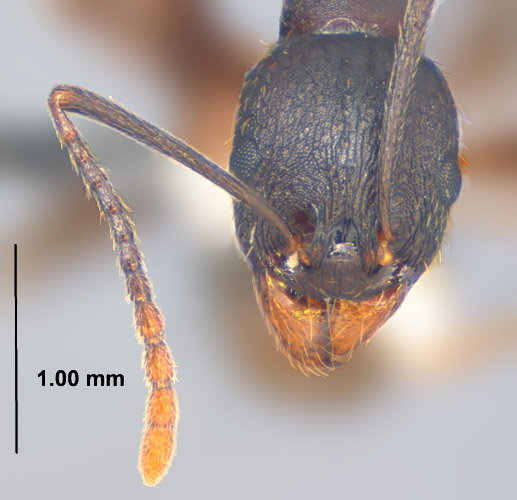 Aphaenogaster picea, full face view of worker. (TN, Sevier Co.) (photo by Joe A. MacGown) |
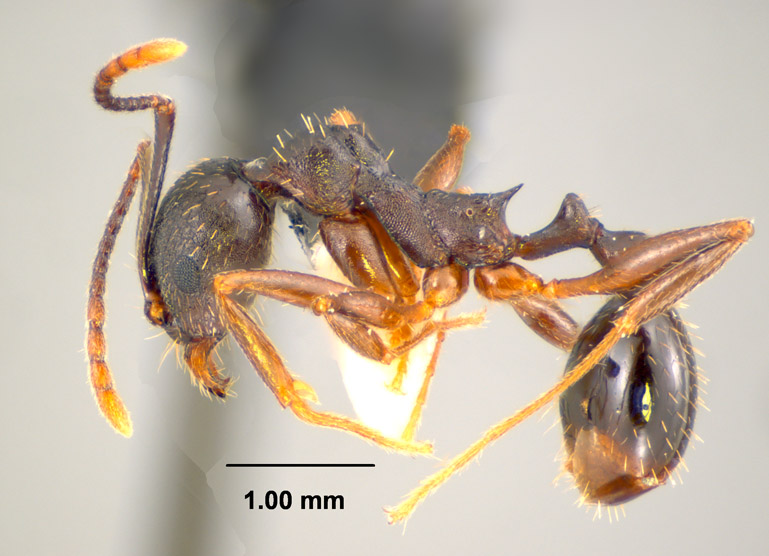 Aphaenogaster picea, lateral view of worker. (TN, SevierCo.) (photo by Joe A. MacGown) |
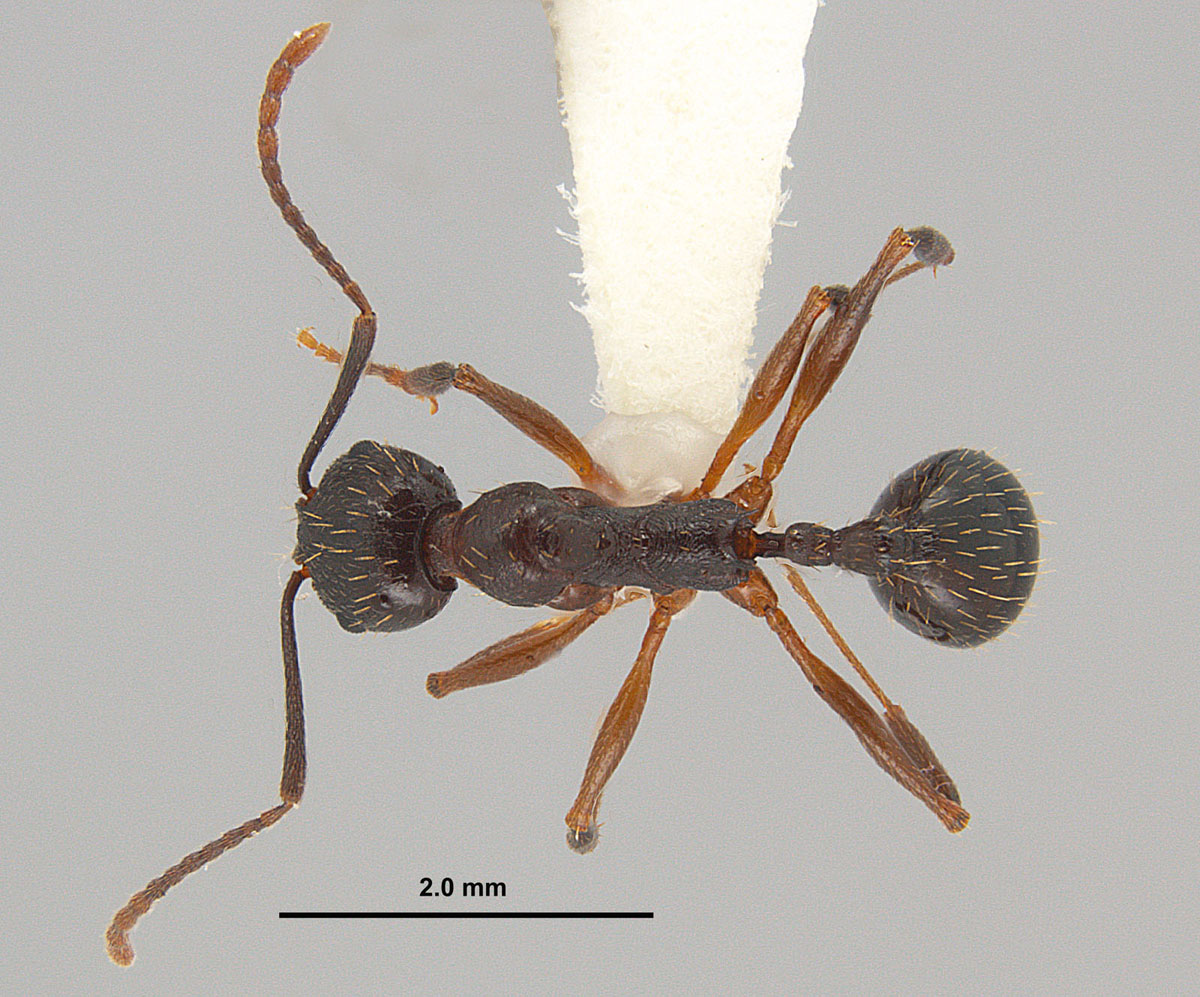 Aphaenogaster picea, dorsal view of worker. (TN, Sevier.) (photo by Joe A. MacGown) |
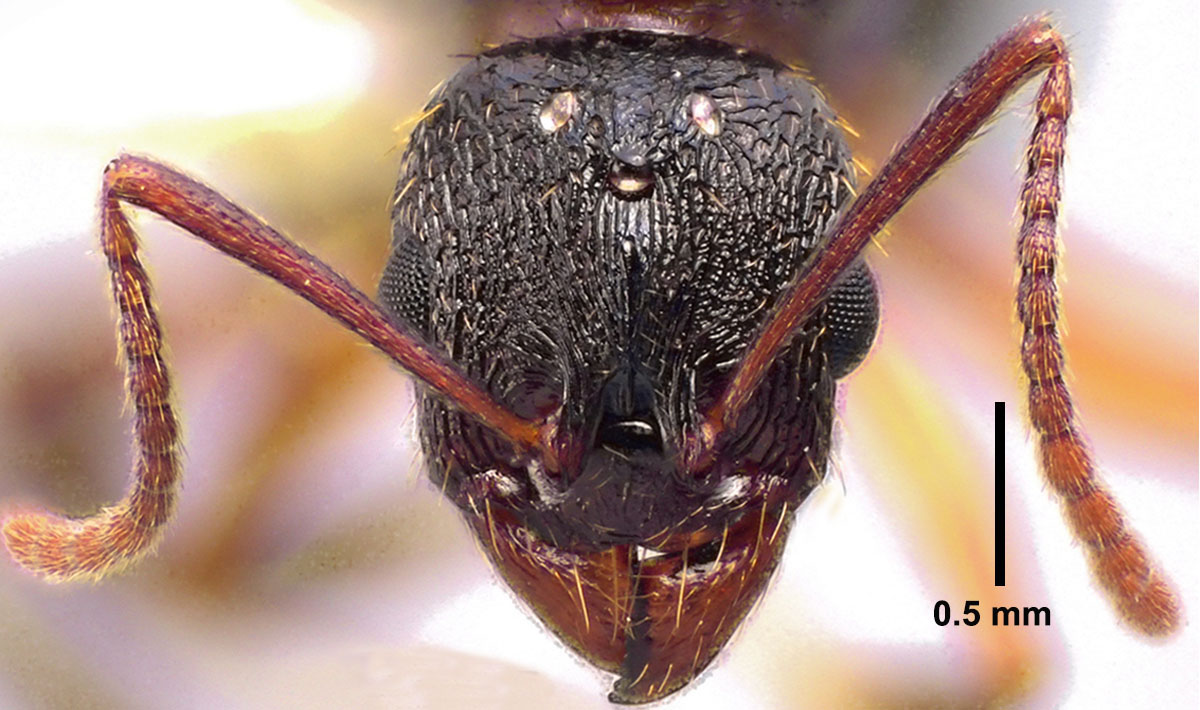 Aphaenogaster picea, full face view of dealate queen. (MI, Barry Co.) (photo by Emmett Collins-Sussman at Antweb.org) |
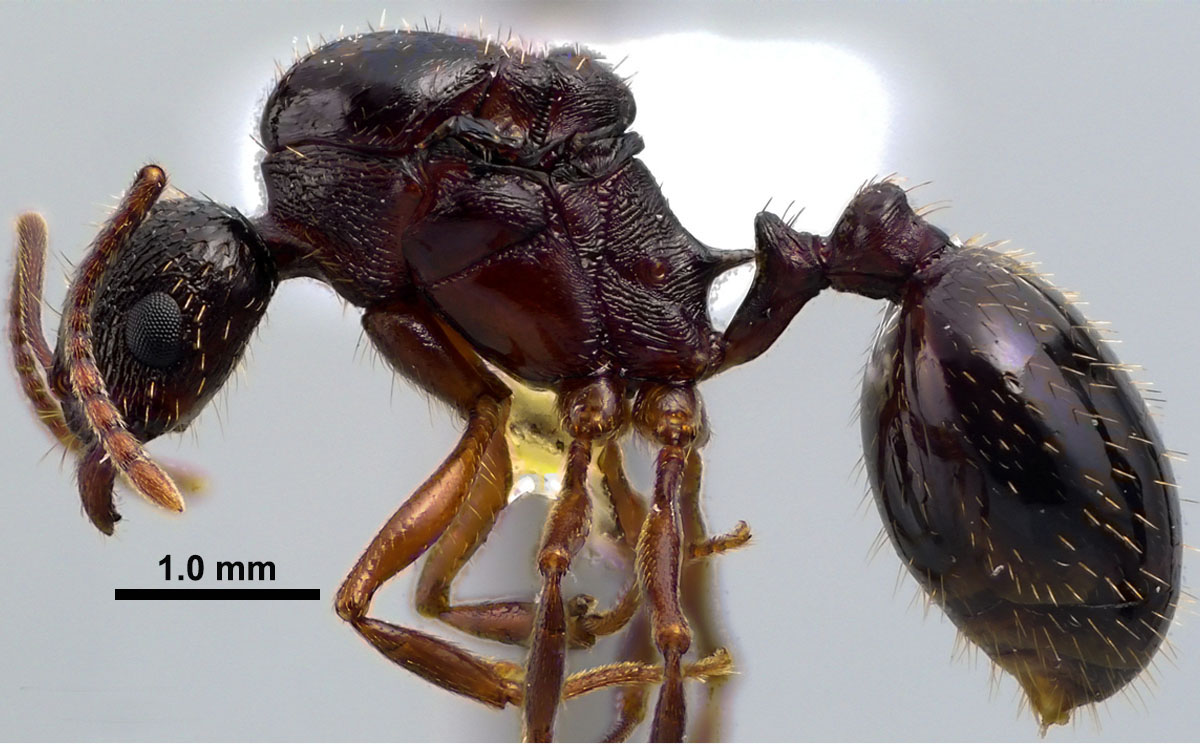 Aphaenogaster picea, lateral view of dealate queen. (MI, Barry Co.) (photo by Emmett Collins-Sussman at Antweb.org) |
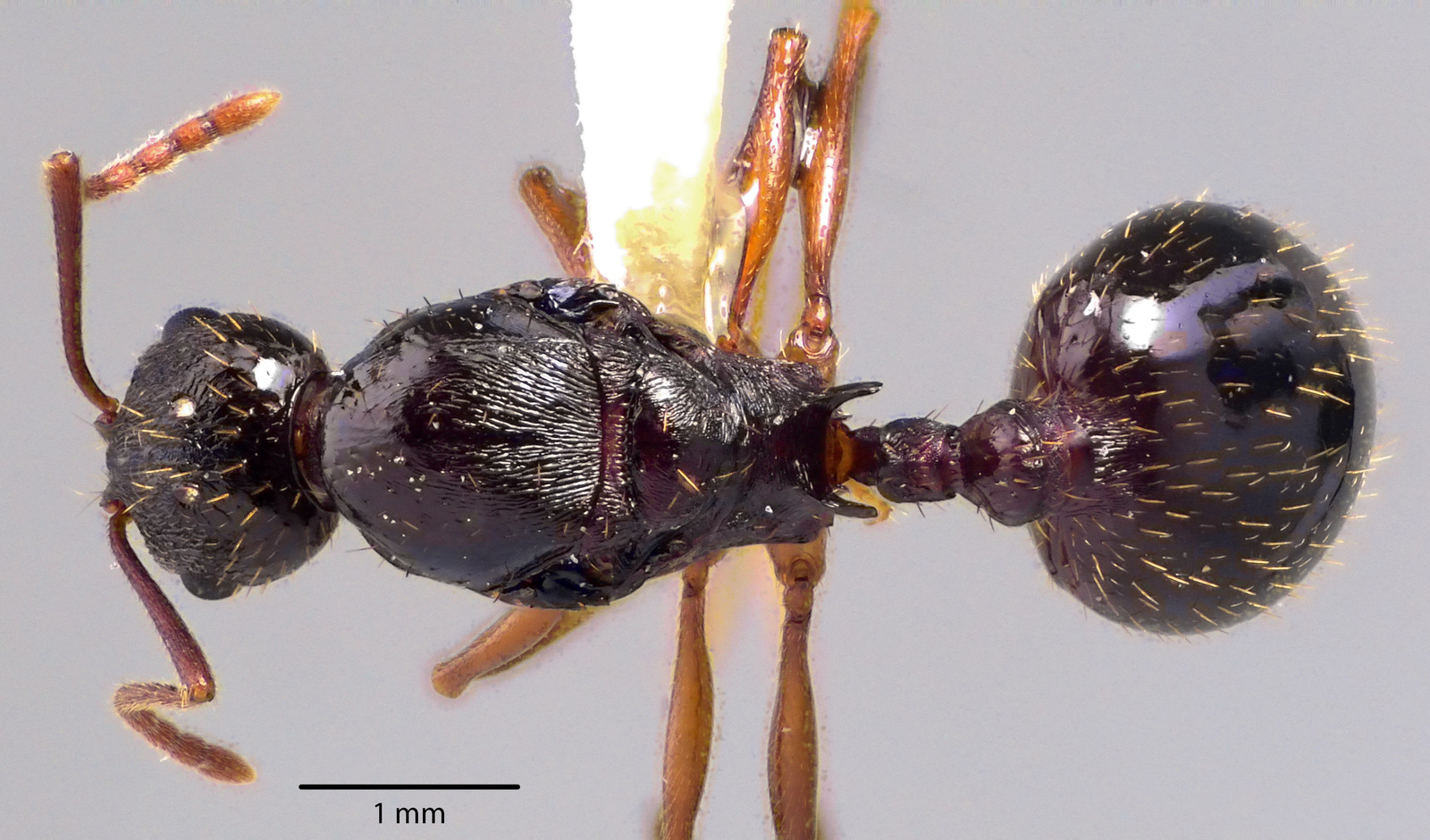 Aphaenogaster picea, dorsal view of dealate queen. (MI, Barry Co.) (photo by Emmett Collins-Sussman at Antweb.org) |
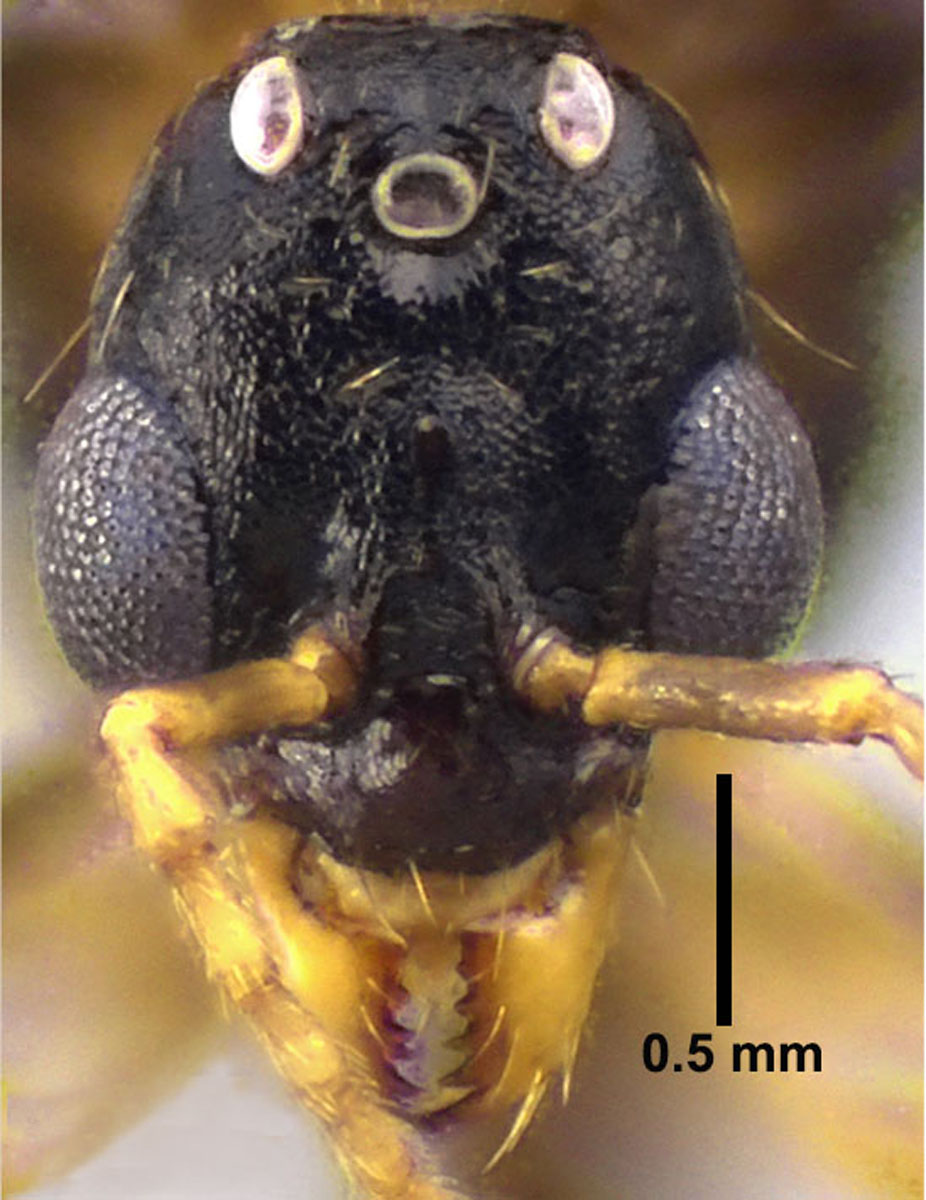 Aphaenogaster picea,full face view of alate queen. (photo from Antweb.org) |
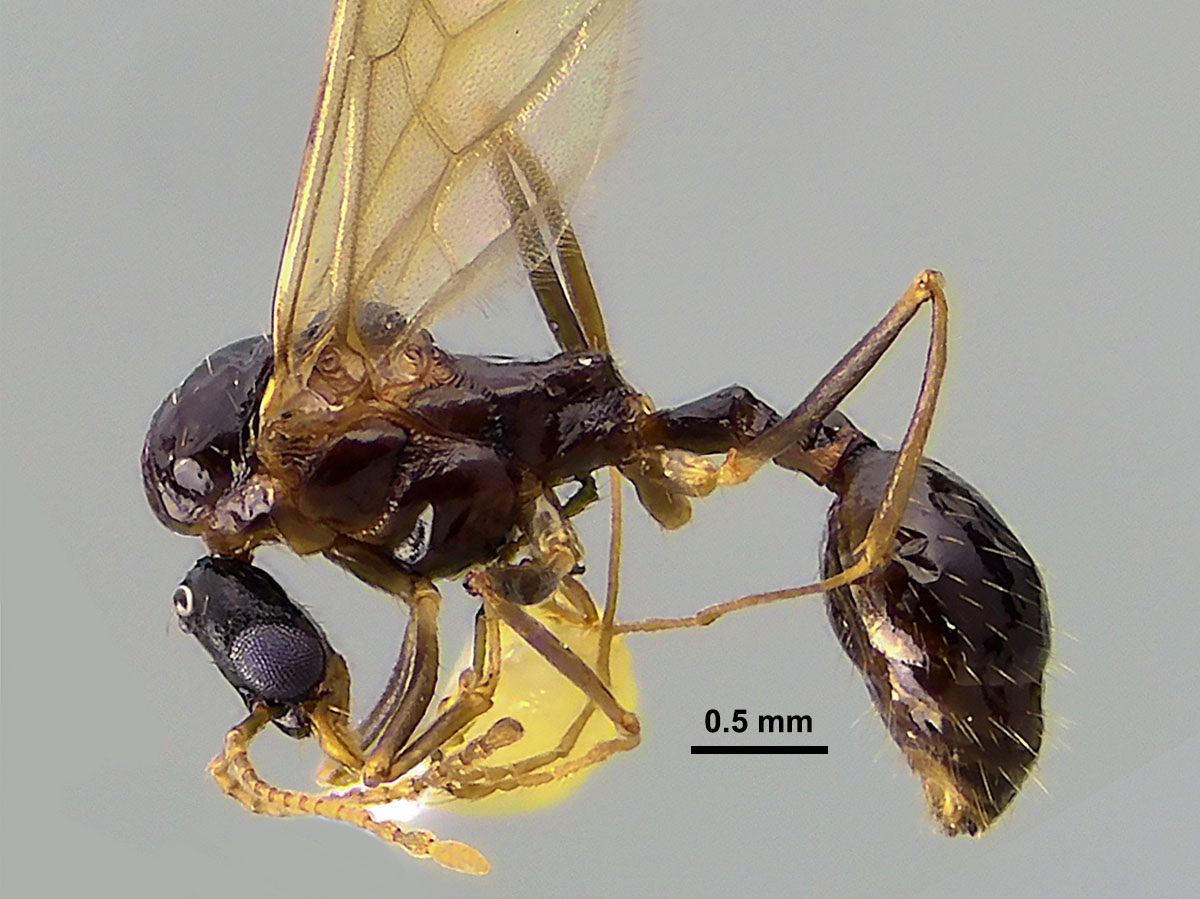 Aphaenogaster picea,lateral view of alate queen.(MI, Barry Co.) (photo by Emmett Collins-Sussman at Antweb.org) |
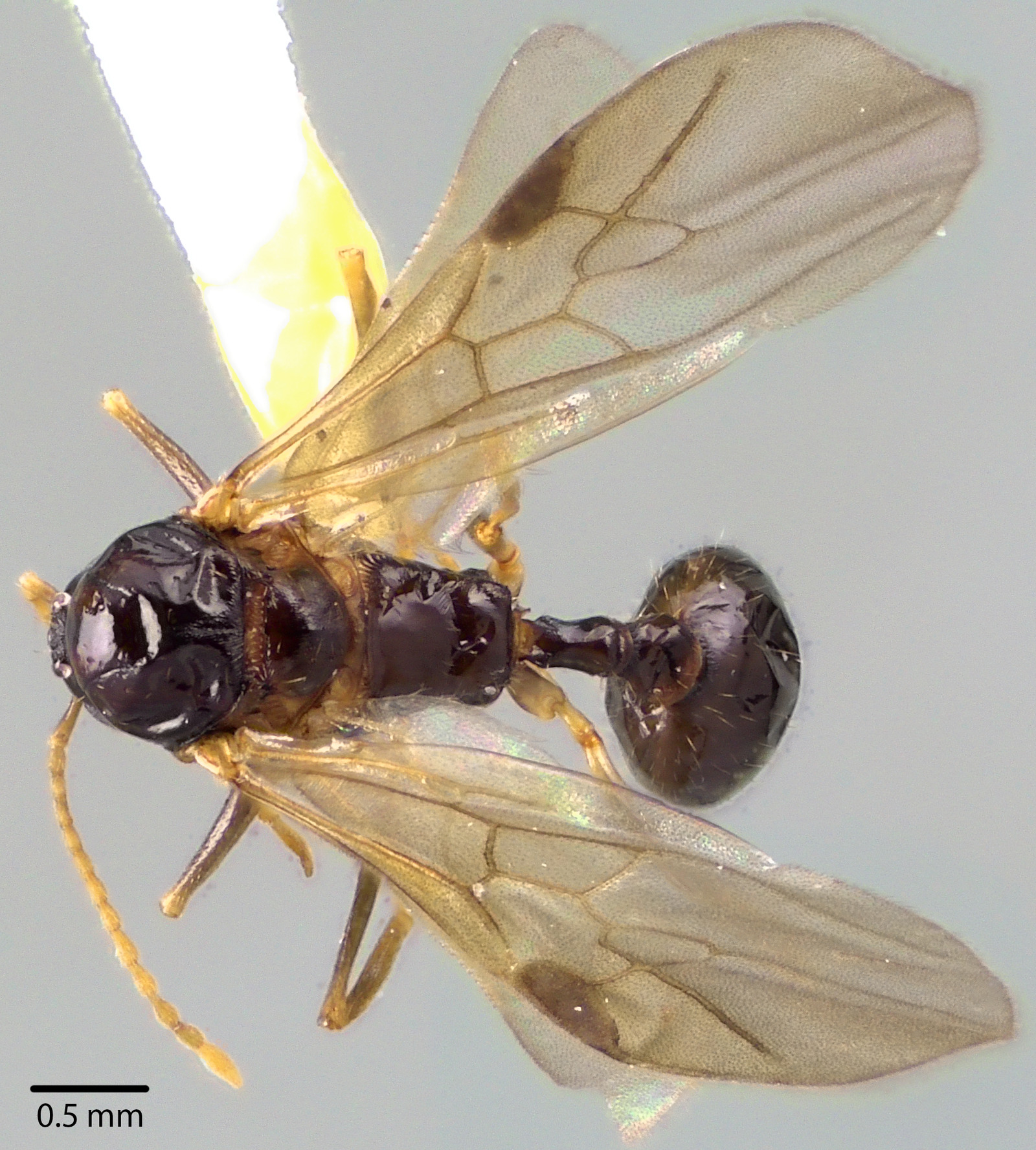 Aphaenogaster picea,dorsalview of alate queen.(MI, Barry Co.) (photo by Emmett Collins-Sussman at Antweb.org) |
Introduction Diagnosis.Worker: Slender, medium sized (TL ≈ 3.5–6 mm), entire body including scapes, fore coxa, and enlarged region of femora blackish, antennomeres I– VII dark brown, VIII– XII contrastingly lighter brown, mid and hind coxae, tibia, and tarsi reddish brown; head, mesosoma, and waist with punctuation and light striae; head, promesonotum, waist, and gaster with somewhat sparse whitish, stiff erect setae. Head slightly longer than wide, posterior corners slightly rounded, posterior margin straight; mandibles triangular, apical tooth the longest followed by four smaller teeth and 4–5 denticles; frontal carina not covering antennal bases; 12 antennomeres, apical four antennomeres forming a loose club; scape not bent at base; eyes large, located on sides of head at midway point; ocelli absent. In lateral view mesosoma not entire, promesonotum elevated above the metanotum; propodeum raised slightly above metanotum, metanotal suture distinct; propodeal dorsum flat and longer than declivity, declivity steep, near 90°; propodeal spines elongate, directed posteriorly; legs long, mid and hind tibia with a single simple spur. Waist two-segmented; petiole pedunculate with raised node, triangular in lateral view, lacking ventral processes; postpetiole with node raised and rounded, flattened ventrally. Sting atrophied. Queen: Larger than worker (TL ≈ 8.0–8.5 mm); entire body piceous except mandibles, antennae, and legs, which are dark reddish brown; sculpture on head, mesosoma, and waist similar to worker, but stronger, except mesopleuron which lacks sculpture except at edges; numerous short, yellowish brown, erect setae present on entire body, more numerous and shorter than in worker. Head only slightly longer than wide, posterior margin slightly convex; mandible similar in shape and dentition to worker; antennae similar to worker but scape wider and shorter, surpassing posterior margin of head by about 1/5 of its length; eyes enlarged, larger than worker; ocelli present. Mesosoma enlarged, squared with mesoscutum, mesoscutellum, and metanotum elevated about propodeum; anterior face of propodeum steep, declivious face approximately 90°. Wings if present with light brown tint; forewing with stigma, and with closed costal, basal, subbasal, discal, and two submarginal cells; propodeal spines triangular, elongate, directed posteriorly. Male: About the size of worker (TL ≈ 6.0 mm); entire body dark blackish brown, scape brownish, flagellomeres yellowish, legs yellowish brown with tarsi yellow; head punctate but shiny, propodeum with transverse striae, remainder of body with reduced sculpture; numerous erect, sparse light colored setae dorsum of head and mesosoma, and sparse but more abundant setae on gaster. Head flattened, longer than wide; mandibles elongate triangular, elongate with 6 to 7 teeth with apical tooth the longest, then teeth successively smaller; eyes extremely large about ½ the length of head, located on lower half of head; three large ocelli present; scape short, subequal to antennomeres II-III; antennae with 13 antennomeres, apical antennomeres slightly enlarged, but not forming and obvious club; thorax enlarged and elevated above propodeum; wings with yellowish brown tint; forewing with six closed cells as in queen; propodeum lacking spines but with prominent rounded triangular protuberances; 2-segmented waist; petiole elongate, node barely raised; postpetiole elongate with low rounded node. Similar species. A. carolinensis:lighter yellowish brown with short propodeal spines; Biology/Habitat. This species that is restricted to higher elevations in mountainous or rocky habitats in the Southeast where it nests in rotting wood. At Coal Creek, we found this species in hemlock and hardwood habitats. Distribution Pest Status. Members of this genus have atrophied stingers and thus, are not stinging pests. Although it nests in rotting wood, it has only been reported as an occassional structural pest (Smith 1965). Literature Cited Smith, M.R. 1965. House-infesting ants of the Eastern United States, their recognition, biology, and economic importance. United States Department of Agriculture, Technical Bulletin No. 1326: i-105. |
||


MEM | Research Taxa | Introduction | Faunal Lists | Identification | How to Use the Keys | Glossary | Collecting Tips | Specimen Preparation MEM Publications | MEM Ant Publications | Ant Videos | Ant News | MEM Ant Blog | References | Acknowledgments | Links
Author-Joe MacGown: jmacgown@entomology.msstate.edu
The ant web site was uploaded on 6 March 2003 and was last updated on 11 September 2024
(specific pages may have different uploaded and updated dates)
Drawings and photographs by Joe MacGown (unless otherwise noted) and copyrighted by the Mississippi Entomological Museum
The development of this web site was supported in part by the National Institute of Food and Agriculture, United States Department of Agriculture, under Project No. MIS-012040 and the USDA-ARS Areawide Management of Imported Fire Ant Project (Richard L. Brown, Principal Investigator).