
Subfamily FORMICINAE Author: Joe A. MacGown and Nicole Rasoamanana |
||
|
||
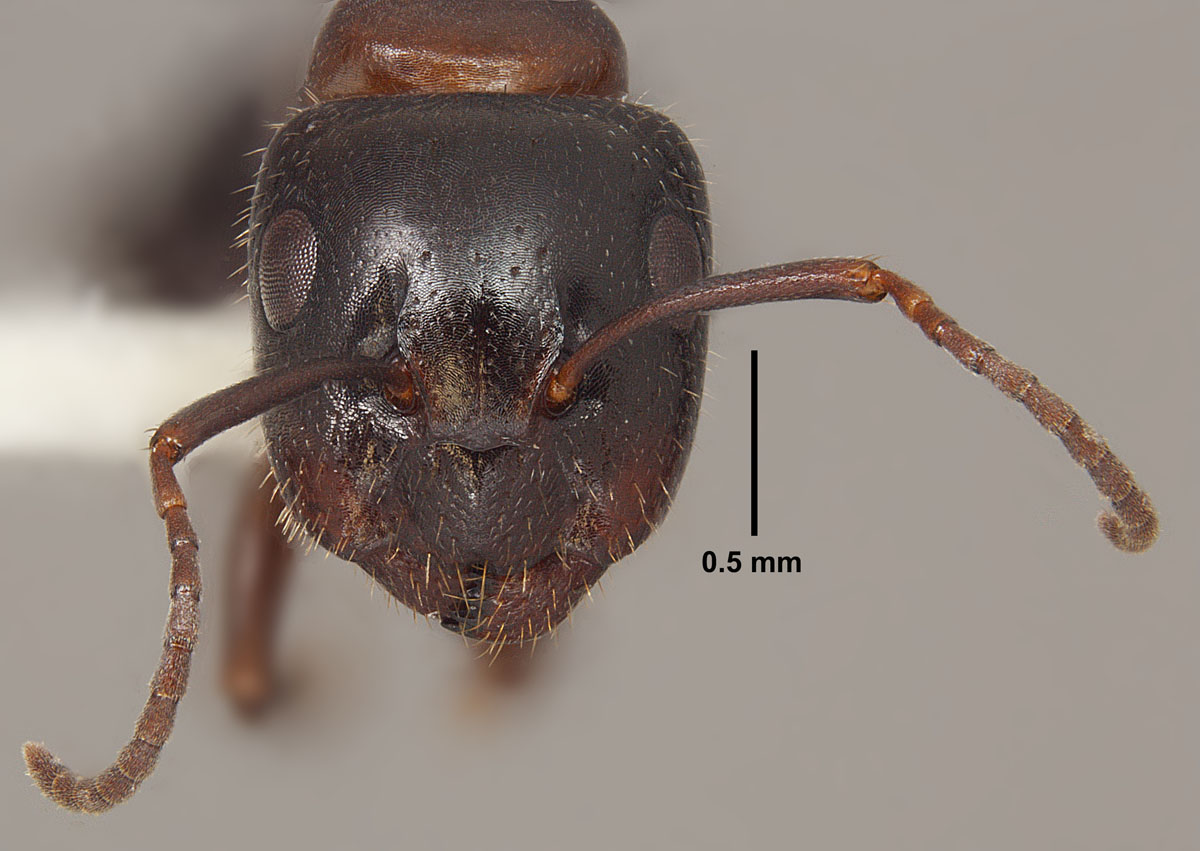
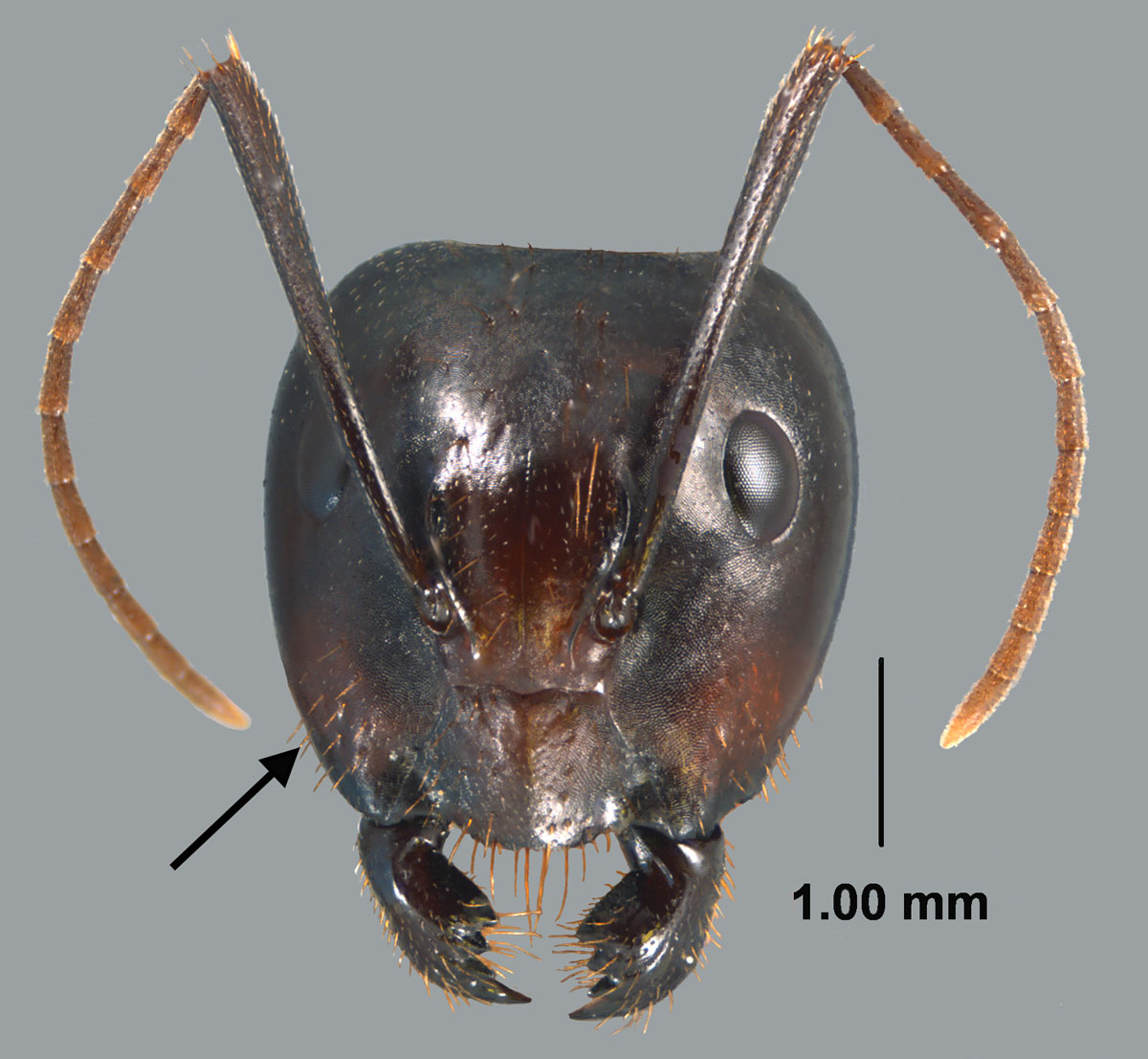
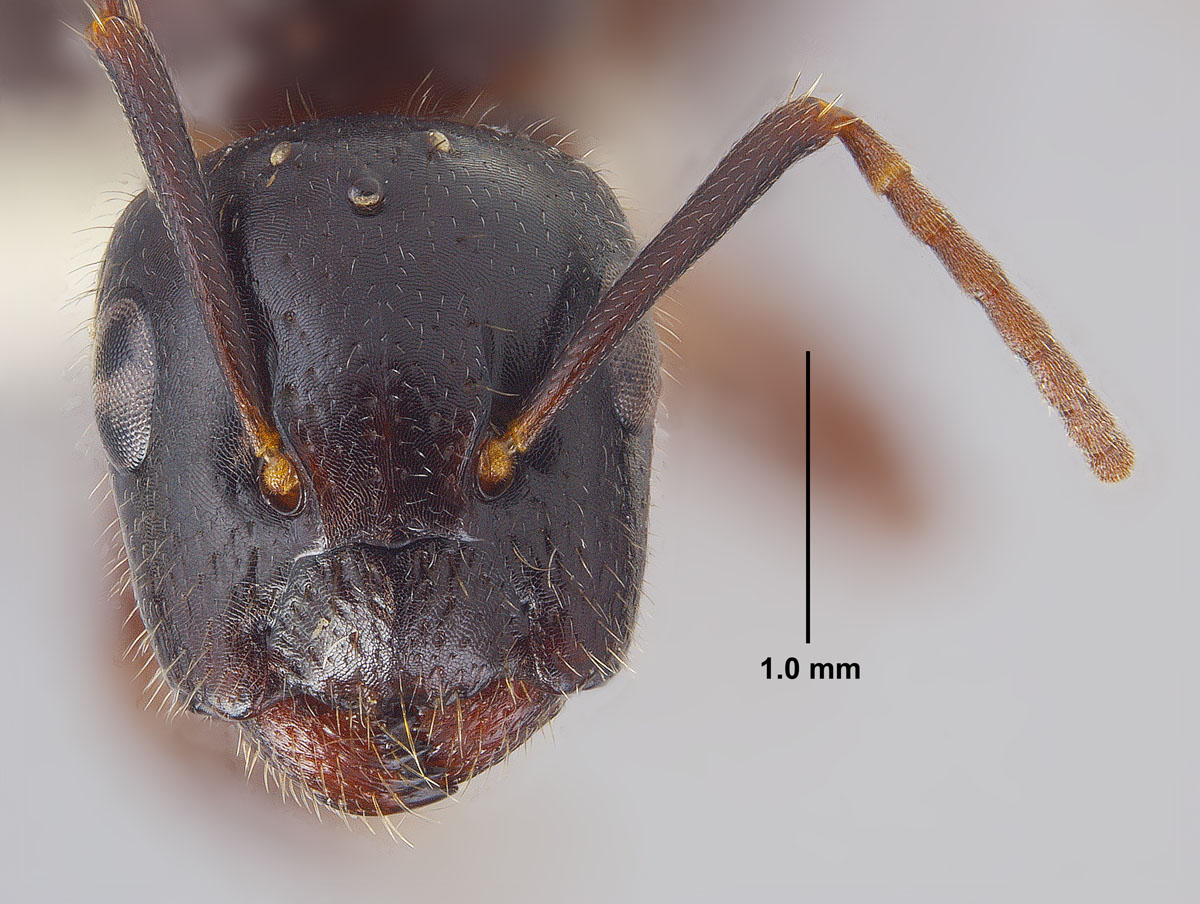 Camponotus caryae, full face view of a queen (AL, Clay Co.) (Photo by Joe A. MacGown). |
|
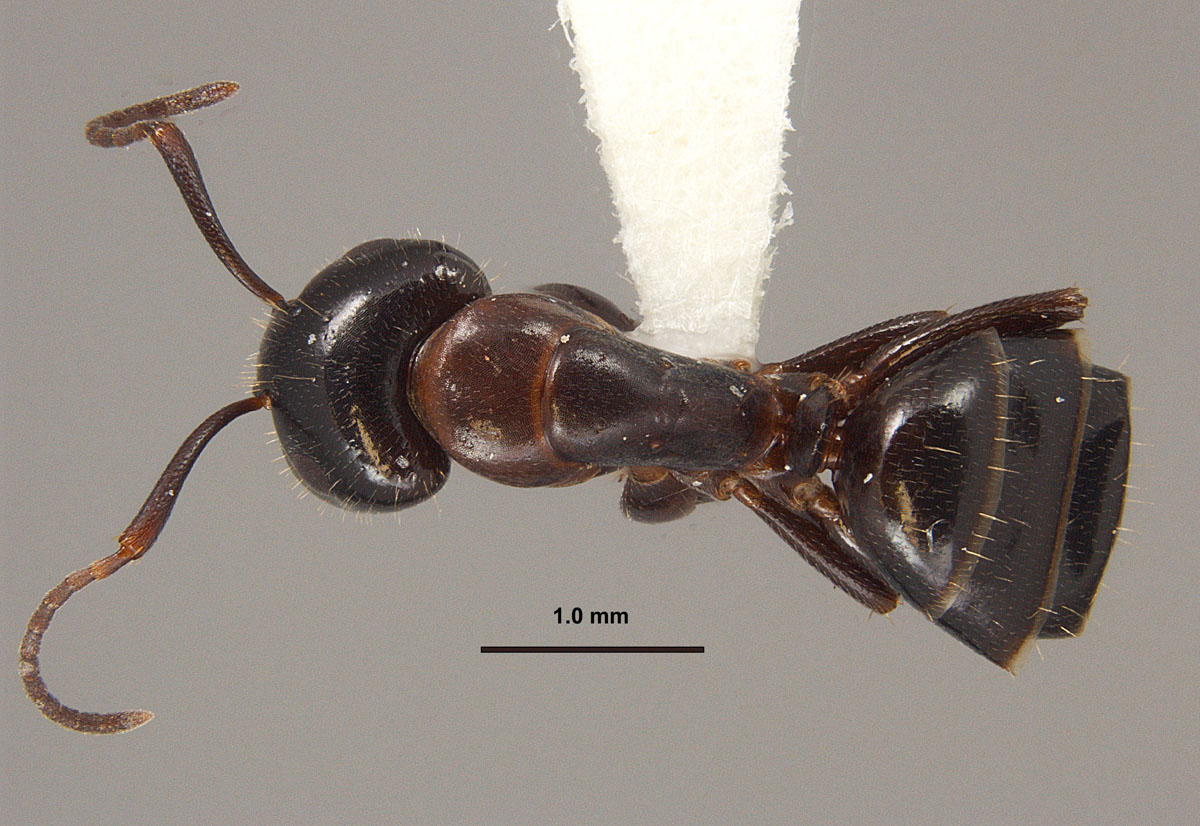
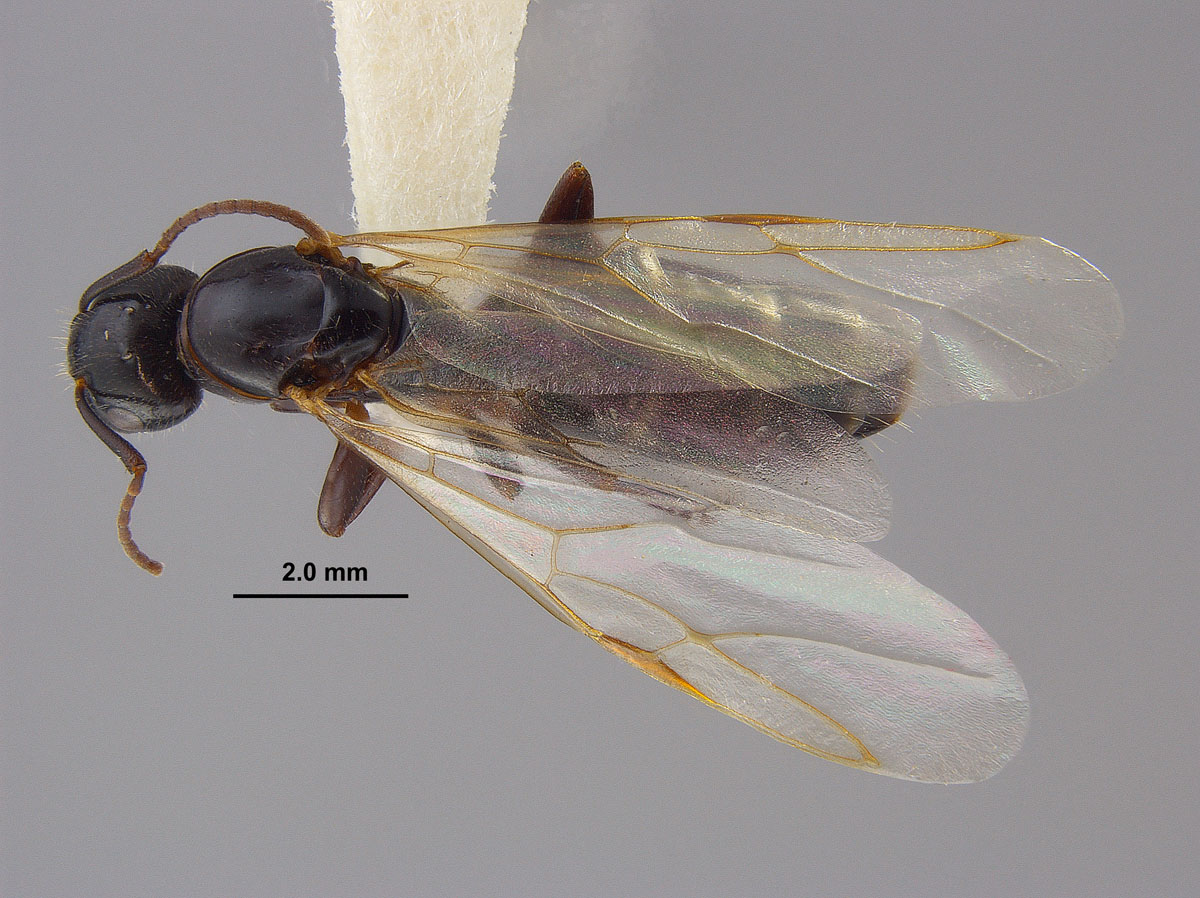 Camponotus caryae, dorsal view of a queen (AL, Clay Co.) (Photo by Joe A. MacGown). |
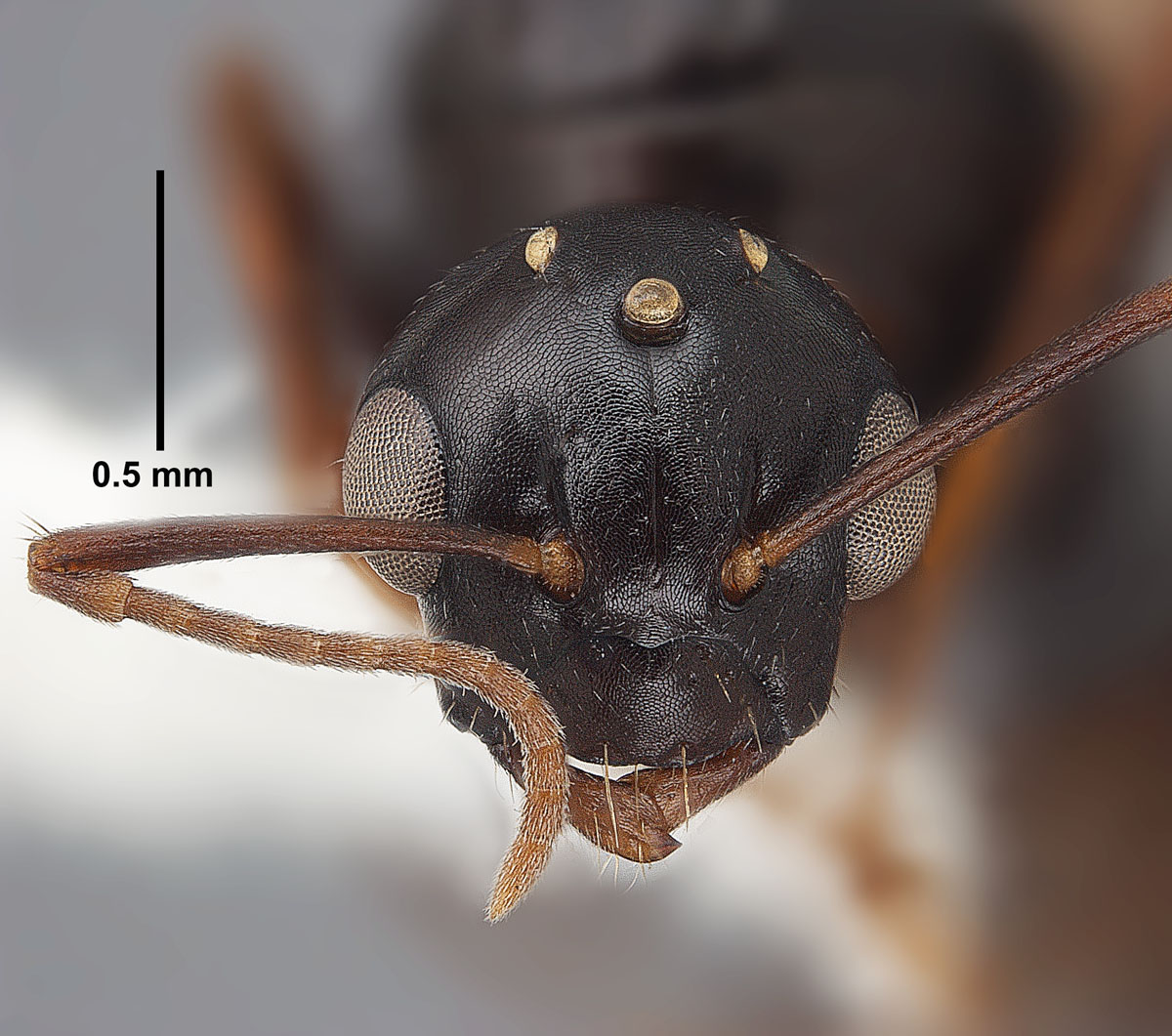 Camponotus caryae, full face view of a male (AL, Clay Co.) (Photo by Joe A. MacGown). |
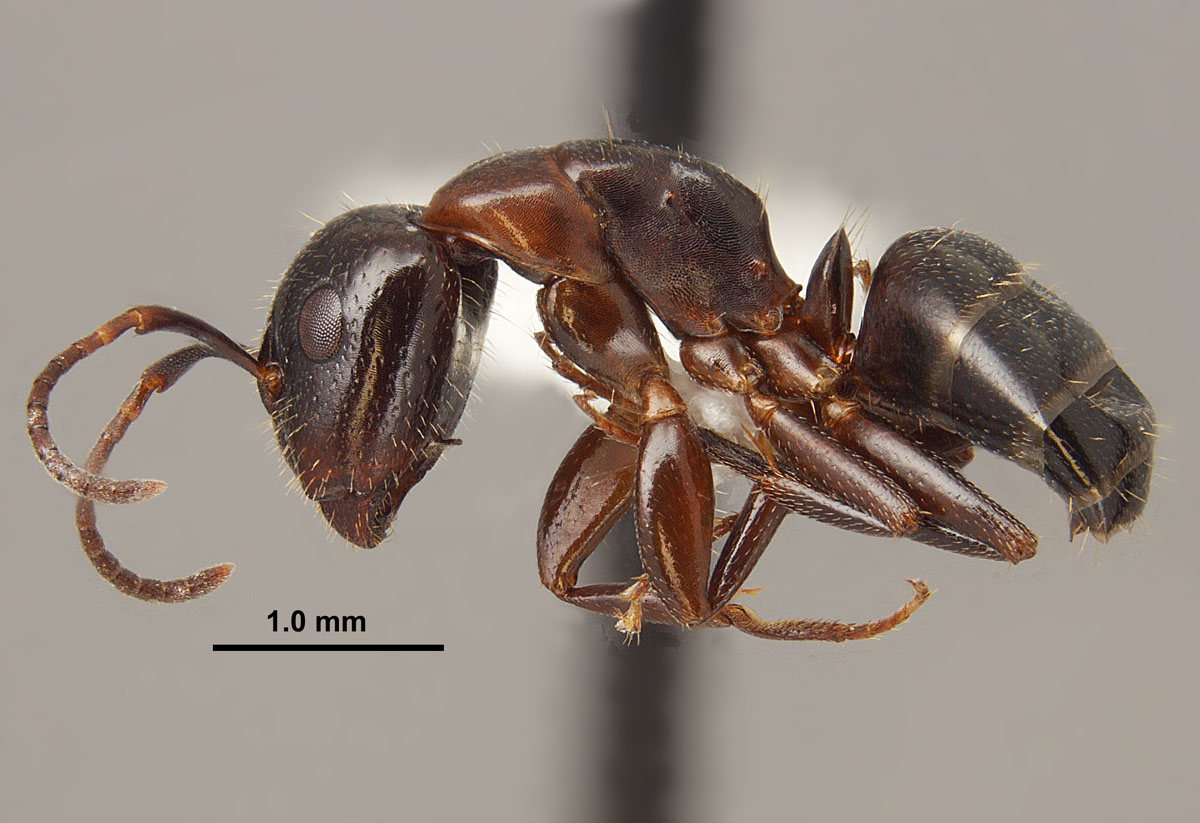
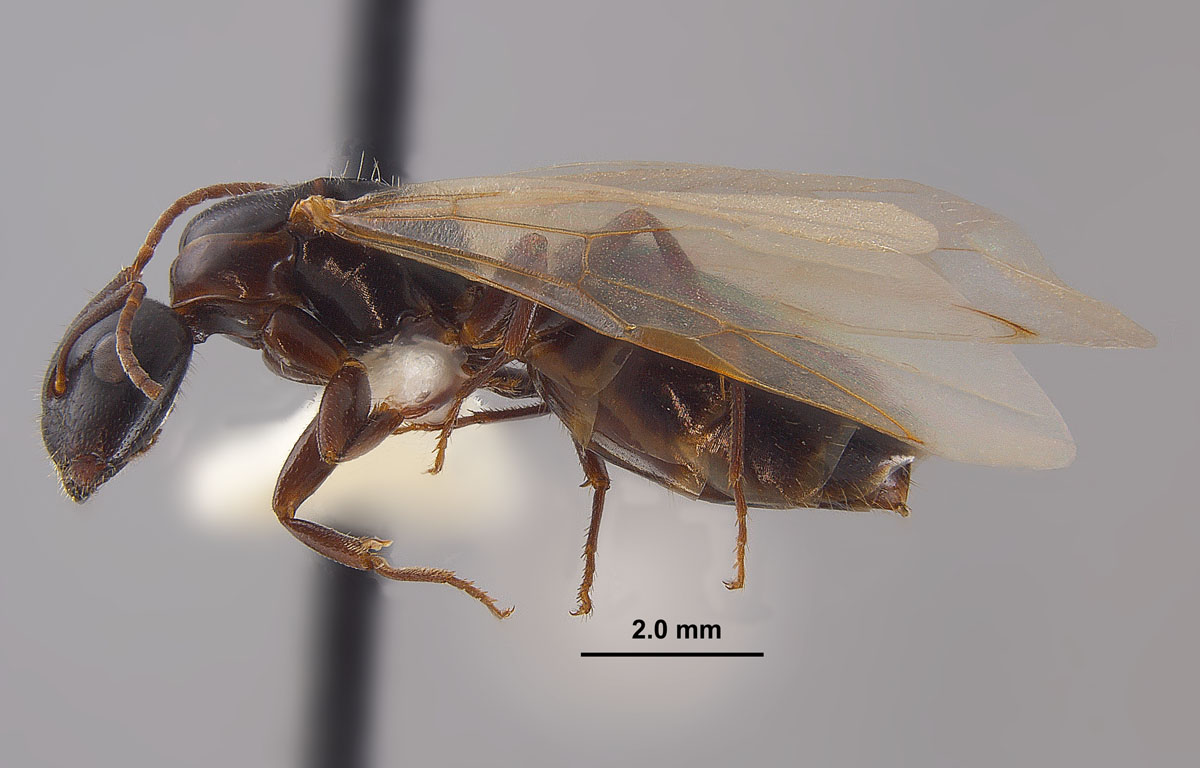
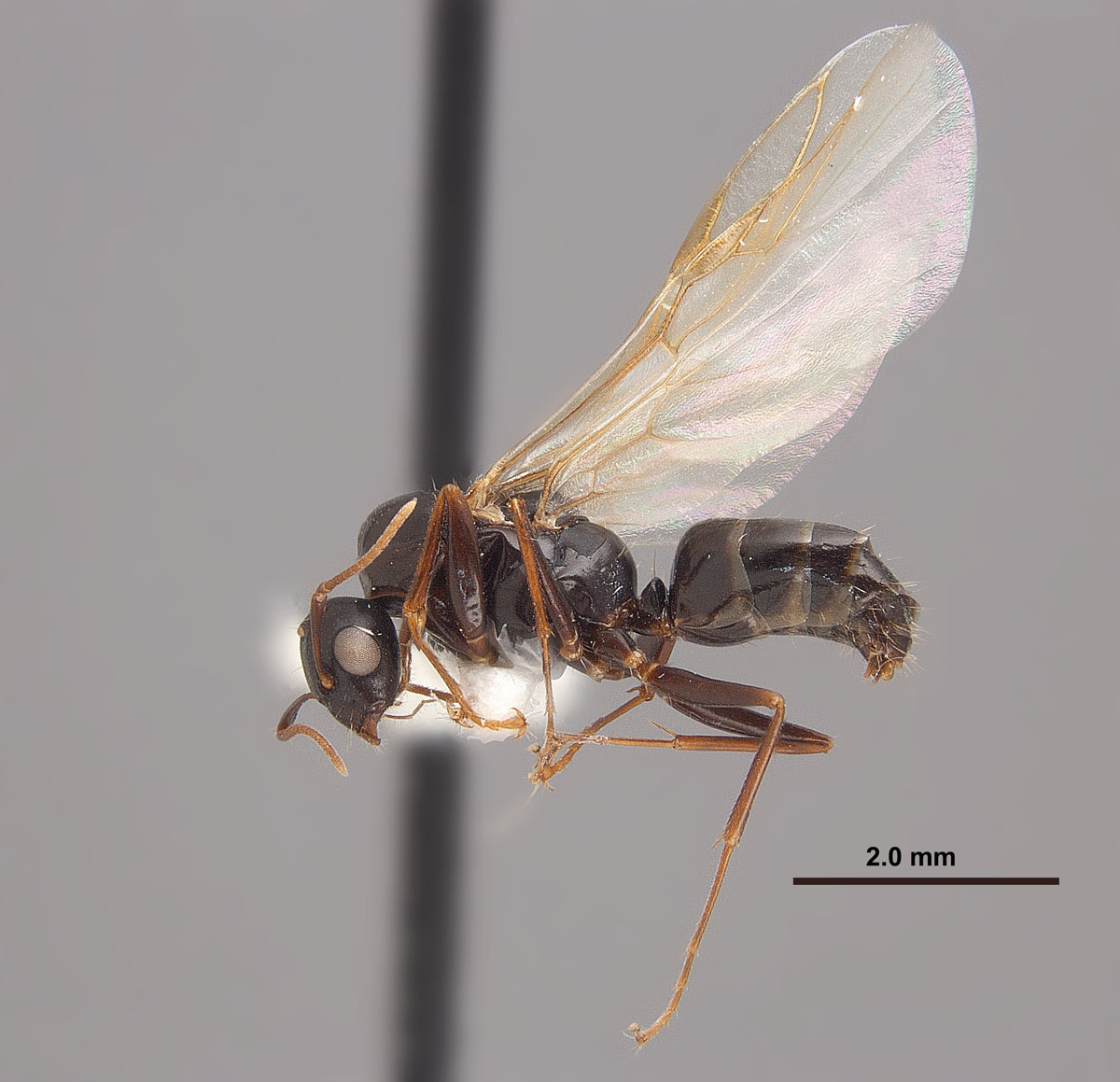 Camponotus caryae, lateral view of a male (AL, Clay Co.) (Photo by Joe A. MacGown). |
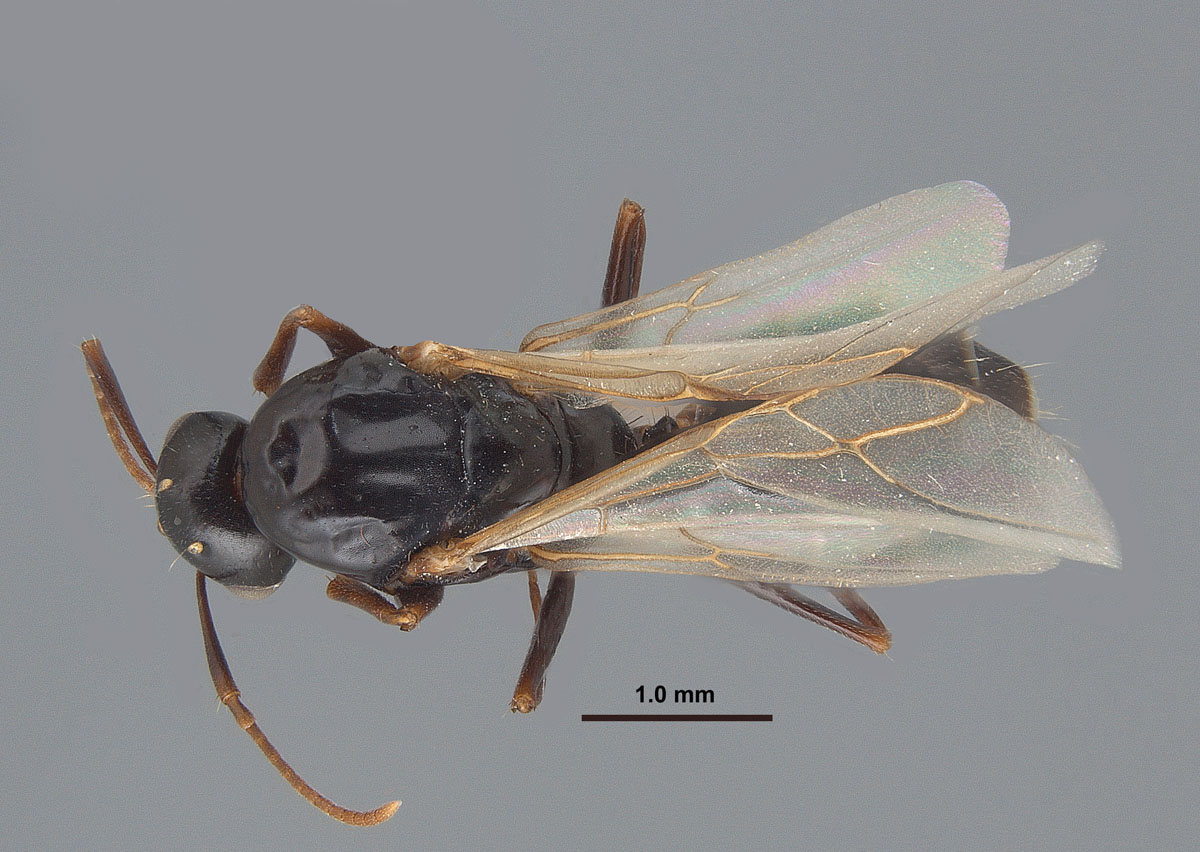 Camponotus caryae, dorsal view of a male (AL, Clay Co.) (Photo by Joe A. MacGown). |
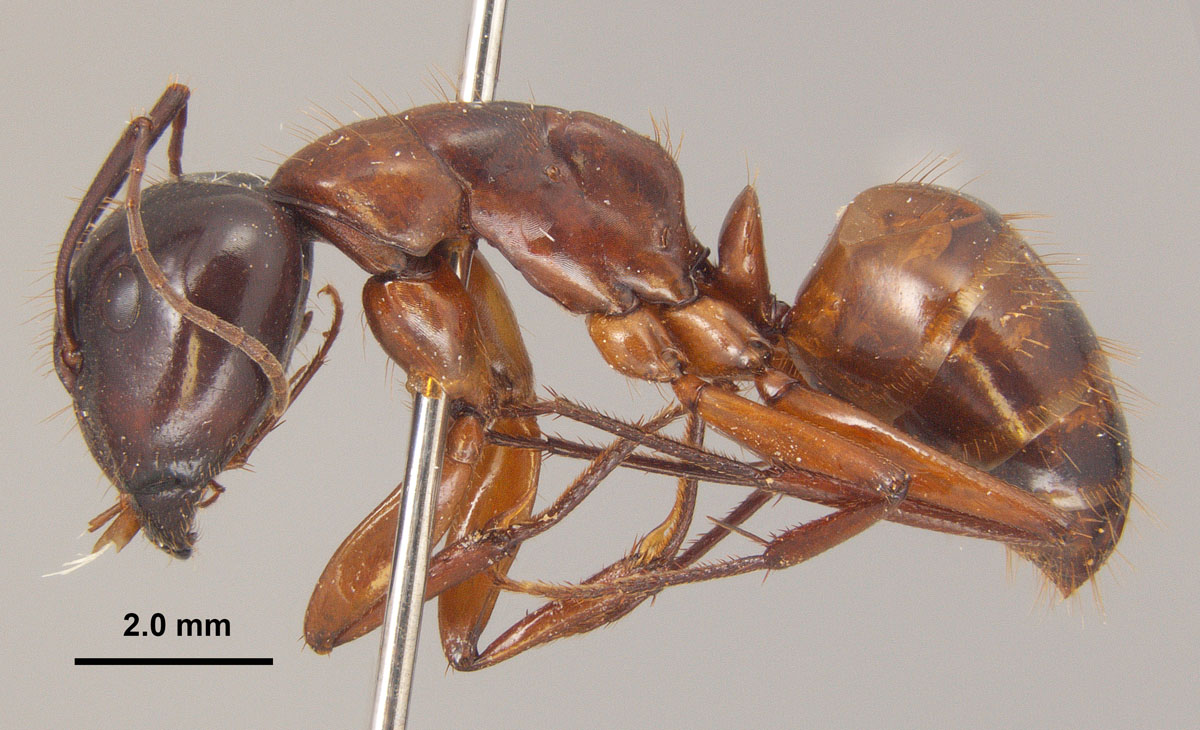
Introduction Species in this genus are variable in size with workers ranging in size from 3 to 15 mm or more in length and queens (also referred to as females) of some species attaining a length of 19 mm or more. Many species are polymorphic. Workers have a 12-segmented antenna that lacks an apical club. Antennal fossae do not touch the posterior border of the clypeus. Ocelli are not present on the heads of workers. The workers of most species have an indistinct metanotal suture between the promesonotum and the propodeum, although this suture is present in C. sexguttatus and some members of the subgenus Colobopsis. Those species that lack the obvoius and deep metanotal suture have the shape of the alitrunk in a smoothly curved arc (as seen in profile) Diagnosis.Major Worker: Large (TL 4.0–5.5 mm); concolorous reddish black to mostly dark brownish black; pronotum, antennae, and legs sometimes a reddish brown; body generally lacking sculpture except head which has a fine microtexture giving it a matte appearance, remainder of body shiny; numerous, short, stiff, white erect setae on head, especially numerous on cheeks; a few scattered longer, flexuous setae on mesosomal dorsum and gaster; appressed pubescence abundant but not dense on head, mesosoma, and gaster. Head subquadrate, nearly as wide as long, posterior border straight to slightly concave; mandibles triangular with five stout teeth; clypeus convex, margin convex with median notch; frontal carinae lyrate, not greatly enlarged, not covering antennal bases; 12 antennomeres, scape extending beyond posterior margin of head, funicular antennomeres approximately all the same length, lacking club; eyes large, located above midline of head, not reaching sides of head; ocelli absent; mesosoma entire, strongly arched, promesonotal suture distinct; propodeum lacking spines or other adornment, declivity steep and slightly concave; legs long, fore coxae expanded, mid and hind tibia with elongate tibial spur lined with fine teeth on inner border. Waist one-segmented with high, triangular, erect node, slightly convex on anterior side, flattened on posterior side. Acidopore present, with a few setae present but not entirely fringed with setae. Minor Worker (not pictured): Similar to major, but smaller (TL ≈ 6.5–7.0 mm); color, sculpture, setation, and pubescence similar to major; head longer than wide; mandibles slender triangular; scapes very long, surpassing posterior margin of head by more half the length of scape; eyes proportionally larger and reaching edges of head. Queen: Similar to workers but larger (TL ≈ 6.0–7.5 mm); color, sculpture, setation, and pubescence similar to major worker. Head slightly longer than wide, widest posteriorly, posterior border straight to slightly convex; mandibles similar to worker; scapes surpassing posterior margin of head by about 1/3 of scape length; funiculus similar to worker; eyes larger than in worker, reaching edges of head; ocelli present. Mesosoma enlarged, subrectangular in lateral view; propodeum rounded, lacking adornment, declivity steep but less than 90°; wings when present with yellowish brown tint, veins and stigma brown, forewing with closed costal, basal, subbasal, subdiscal, submarginal, and marginal cells; legs similar to worker. Petiolar node high and narrowed from front to back in lateral view; acidopore present. Male: Large, about the size of minor worker (TL ≈ 6.5 mm); head, mesosoma, waist, and gaster brownish black with brownish infuscation on sides of mesosoma and on gaster, antennae and legs orangish black; head matte and remainder of body shiny; setation similar to other castes but less setae on cheeks, setae on dorsum on head longer; pubescence sparse. Head small compared to other castes, about as wide as long, ovate posteriorly above eyes, narrowed with sides straight to slightly concave below eyes; mandibles triangular with a single apical tooth; clypeus convex with anterior margin straight; frontal carinae not greatly expanded; antennae long with 13 antennomeres, scape long and surpassing posterior margin of head by over half of its length; eyes larger and slightly bulbous, protruding from sides of head just above midline; ocelli present; mesoscutum broadly rounded anteriorly. Mesosoma enlarged, elongate, rounded rectangular; wings hyaline with golden brown tint basally, with similar venation and closed cells as in queen; legs similar to other castes; propodeum gently sloped toward waist; petiole with low, rounded rectangular node; parameres slender, rectangular, rounded apically with a fringe of short setae. Similar species. Camponotus nearcticus: similar in color, but lacking stiff, erect setae on cheeks; Camponotus decipiens, C. discolor, C. snellingi, and C. subbarbatus differ from C. nearcticus by being bicolored. Biology/Habitat. This species forms small colonies in hollow twigs and branches and in other cavities. This species has not yet been found on the property but is likely. Pest Status. Camponotus caryae may occasionally nest in structures but is not considered to be an economic pest. This ant does not sting but can bite and cause minor irritation by ejecting formic acid from the acidopore located at the posterior portion of the ant. |
||


MEM | Research Taxa | Introduction | Faunal Lists | Identification | How to Use the Keys | Glossary | Collecting Tips | Specimen Preparation MEM Publications | MEM Ant Publications | Ant Videos | Ant News | MEM Ant Blog | References | Acknowledgments | Links
Author-Joe MacGown: jmacgown@entomology.msstate.edu
The ant web site was uploaded on 6 March 2003 and was last updated on 11 September 2024
(specific pages may have different uploaded and updated dates)
Drawings and photographs by Joe MacGown (unless otherwise noted) and copyrighted by the Mississippi Entomological Museum
The development of this web site was supported in part by the National Institute of Food and Agriculture, United States Department of Agriculture, under Project No. MIS-012040 and the USDA-ARS Areawide Management of Imported Fire Ant Project (Richard L. Brown, Principal Investigator).