
Subfamily FORMICINAE Author: Joe A. MacGown |
||
 |
 |
 |
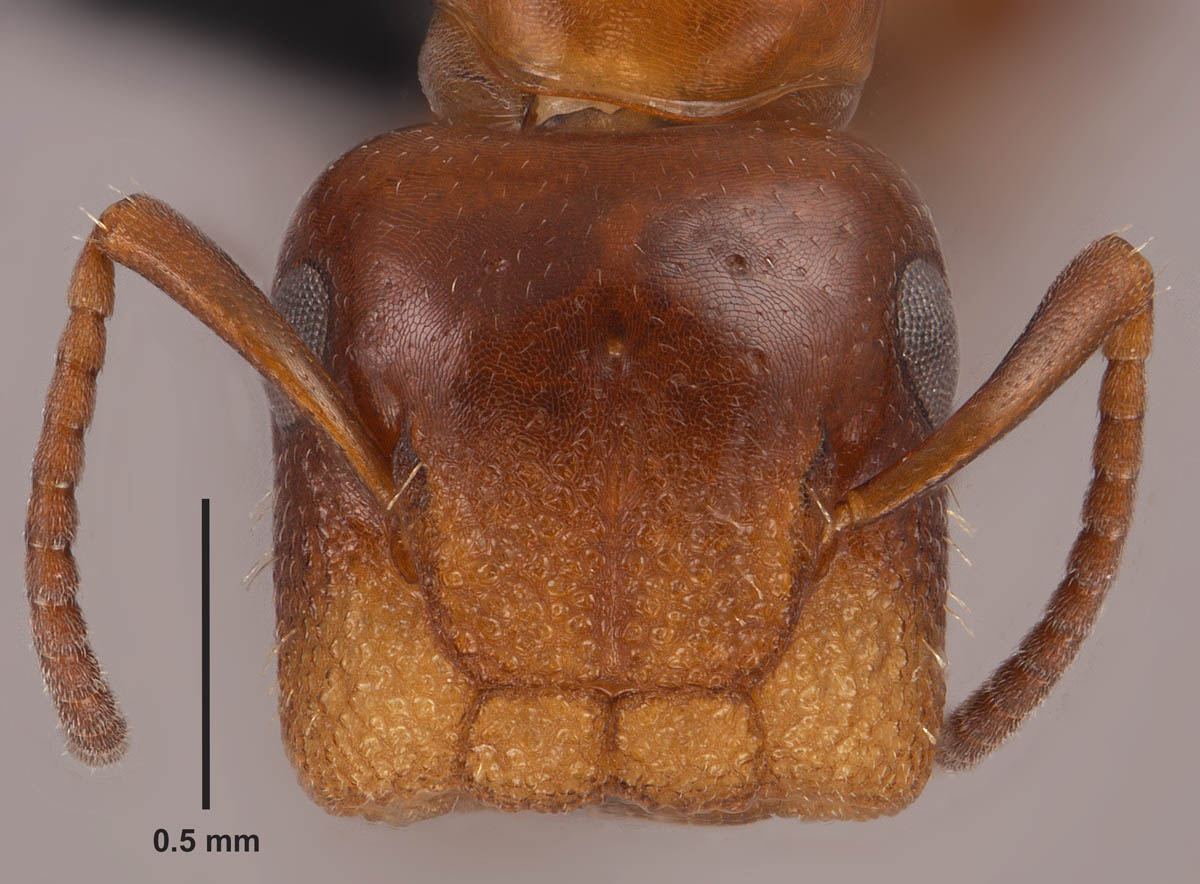
Colobopsis impressa, full face view of a major worker (FL, Orange Co.), (photo by Joe A. MacGown) |
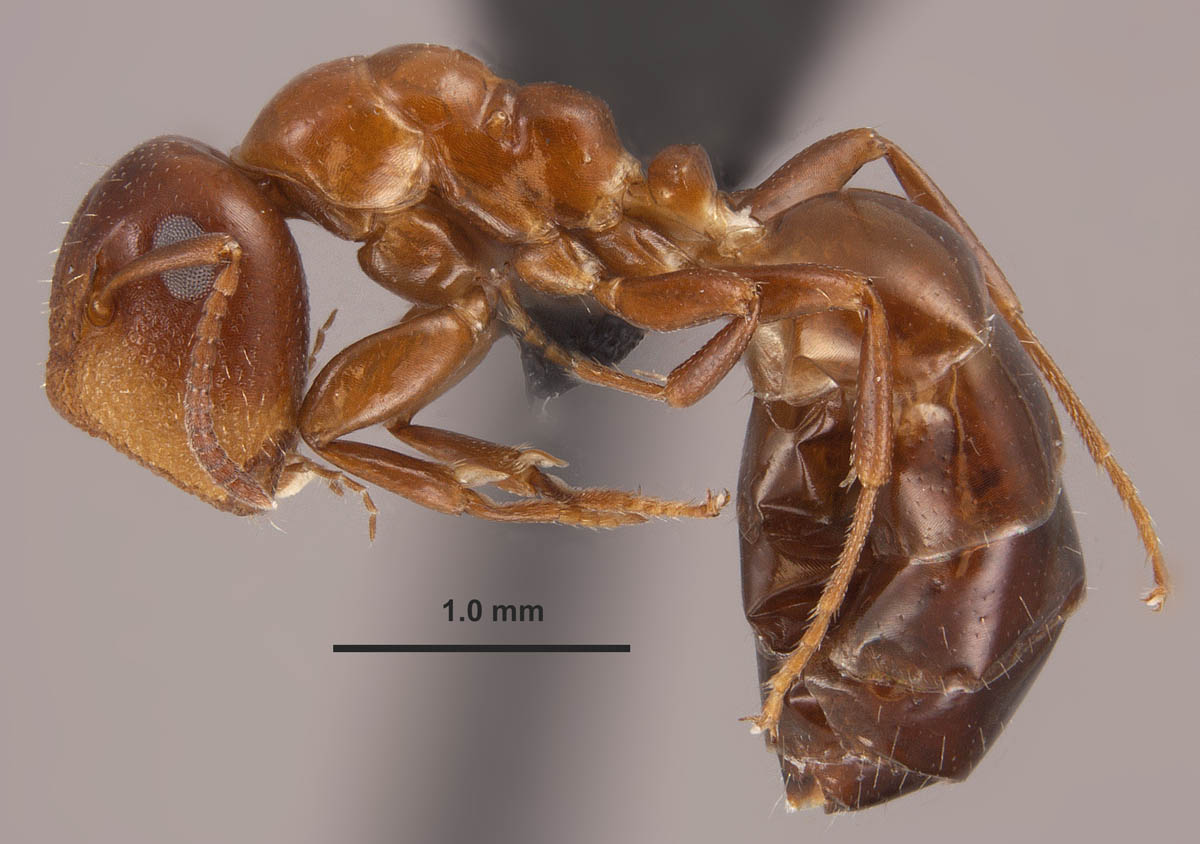
Colobopsis impressa, lateral view of a major worker (FL, Orange Co.), (photo by Joe A. MacGown) |
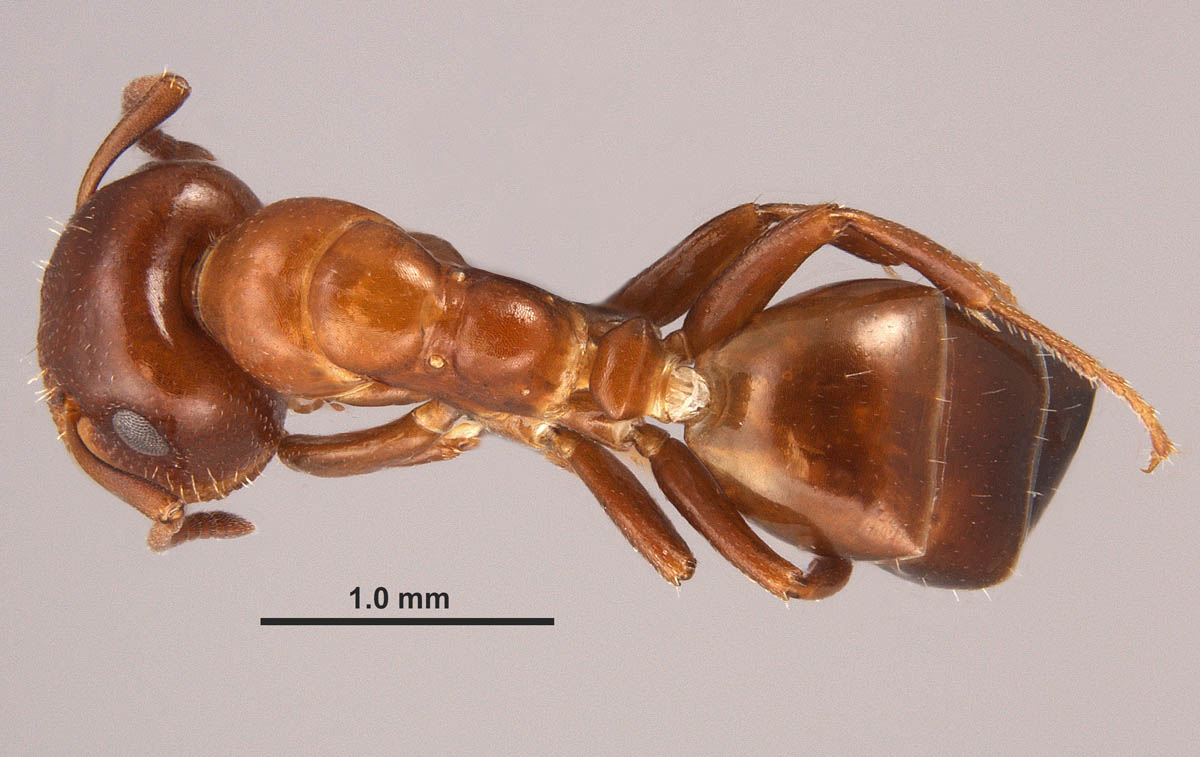
Colobopsis impressa, dorsal view of a major worker (FL, Orange Co.), (photo by Joe A. MacGown) |
 |
 |
 |
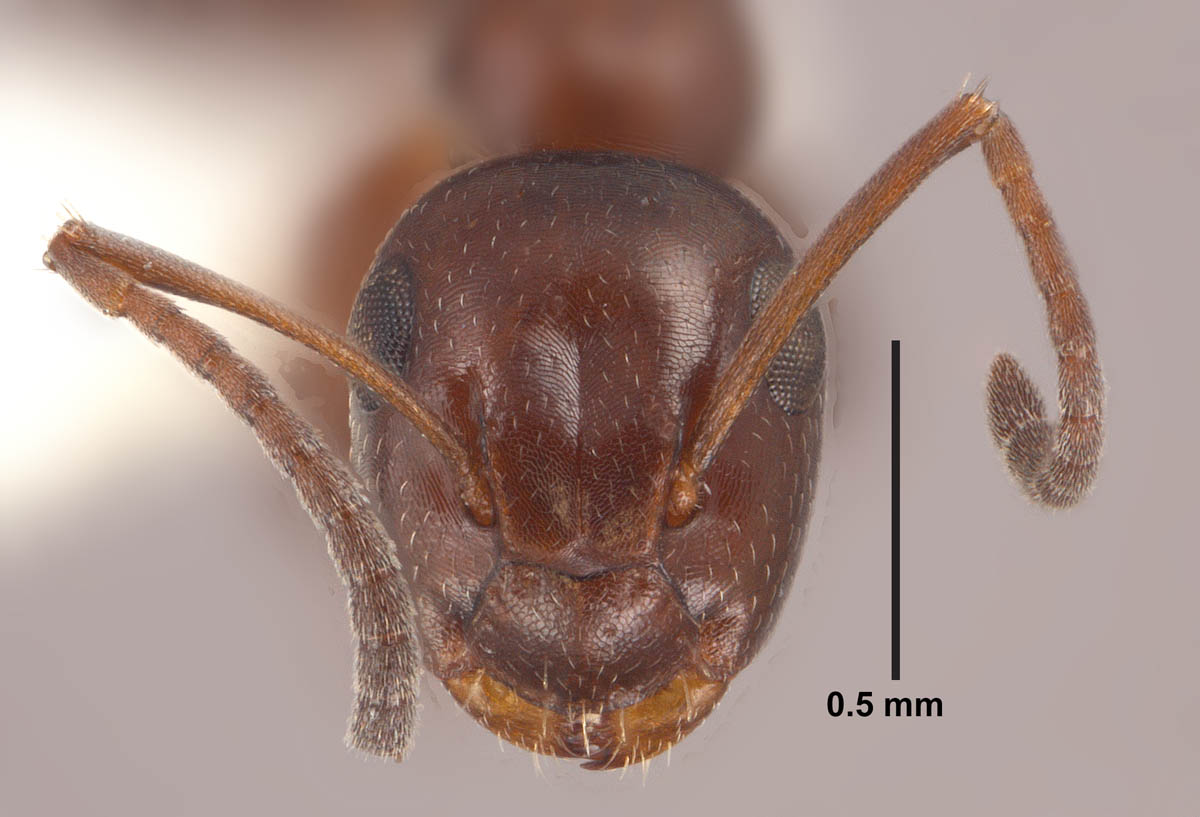
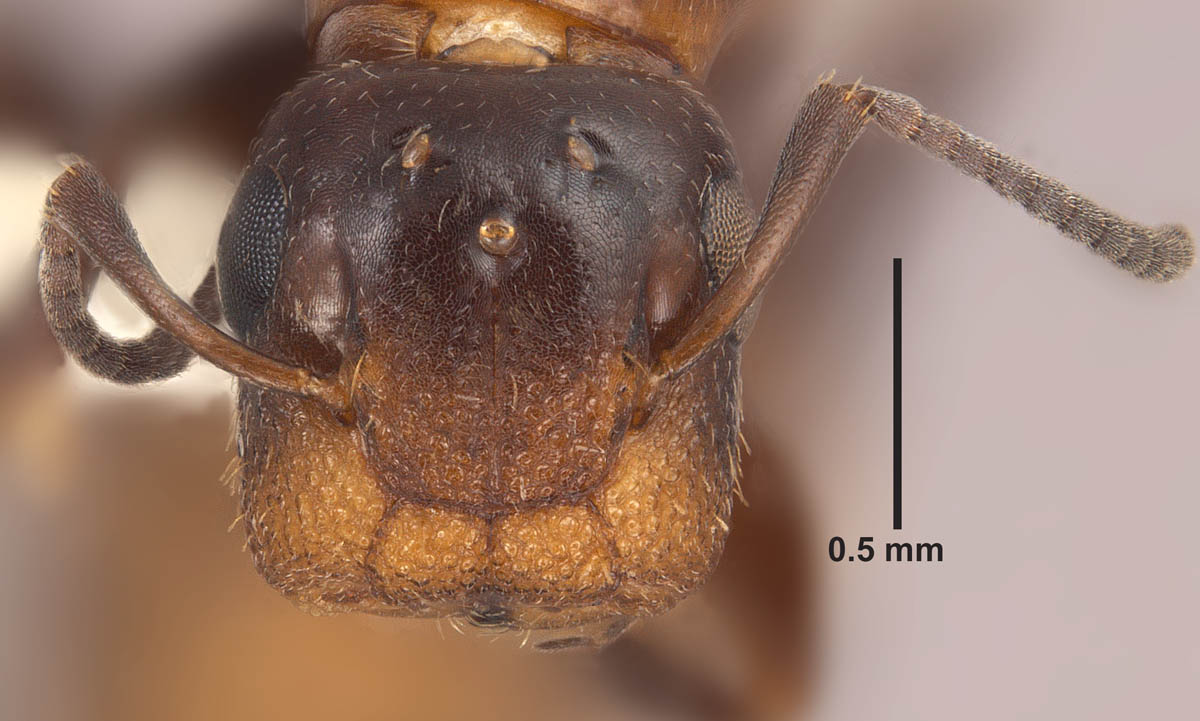
Colobopsis impressa, full face view of a minor worker (FL, Orange Co.), (photo by Joe A. MacGown) |
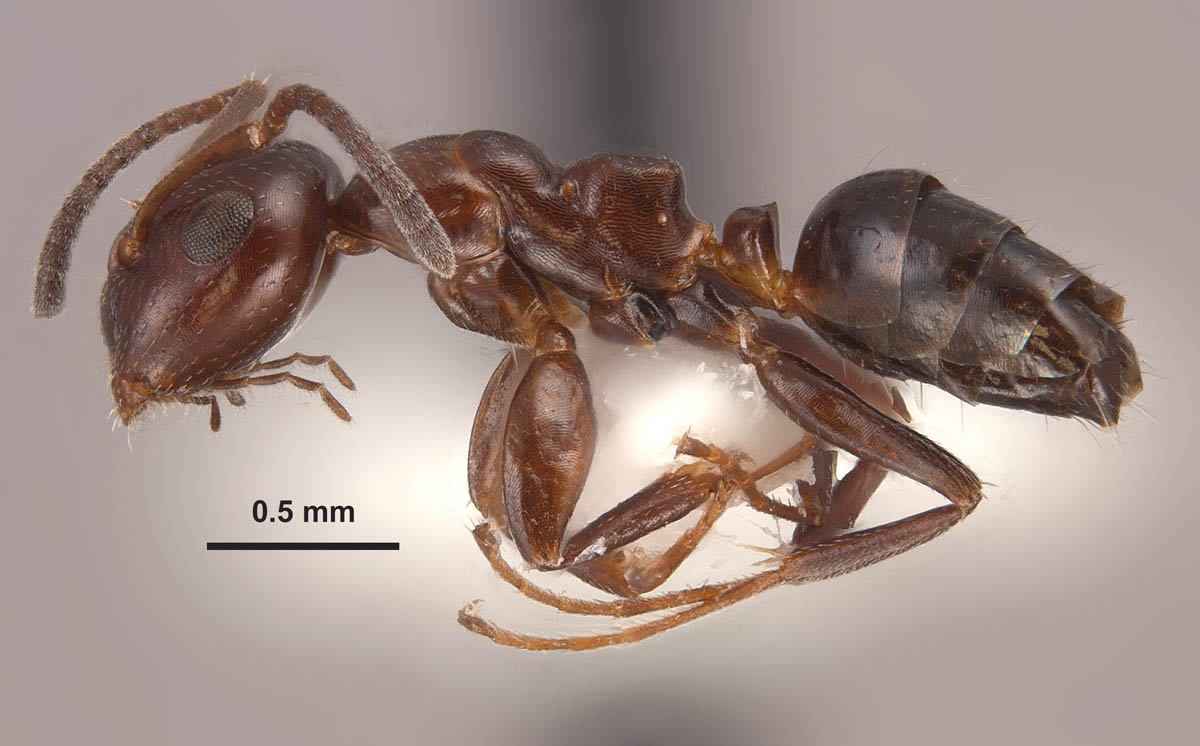
Colobopsis impressa, lateral view of a minor worker (FL, Orange Co.), (photo by Joe A. MacGown) |
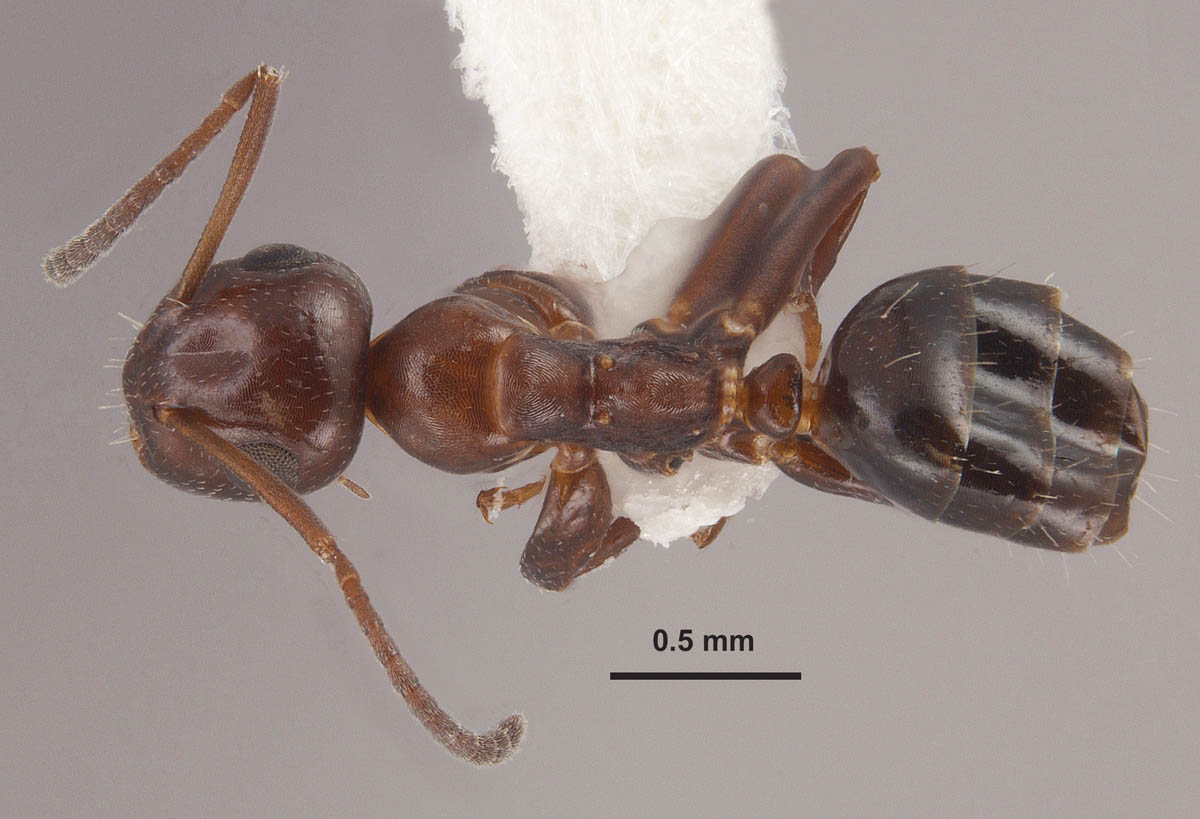
Colobopsis impressa, dorsal view of a minor worker (FL, Orange Co.), (photo by Joe A. MacGown) |
 |
 |
 |
Colobopsis impressa, full face view of a queen (MS, Oktibbeha Co.), (photo by Joe A. MacGown) |
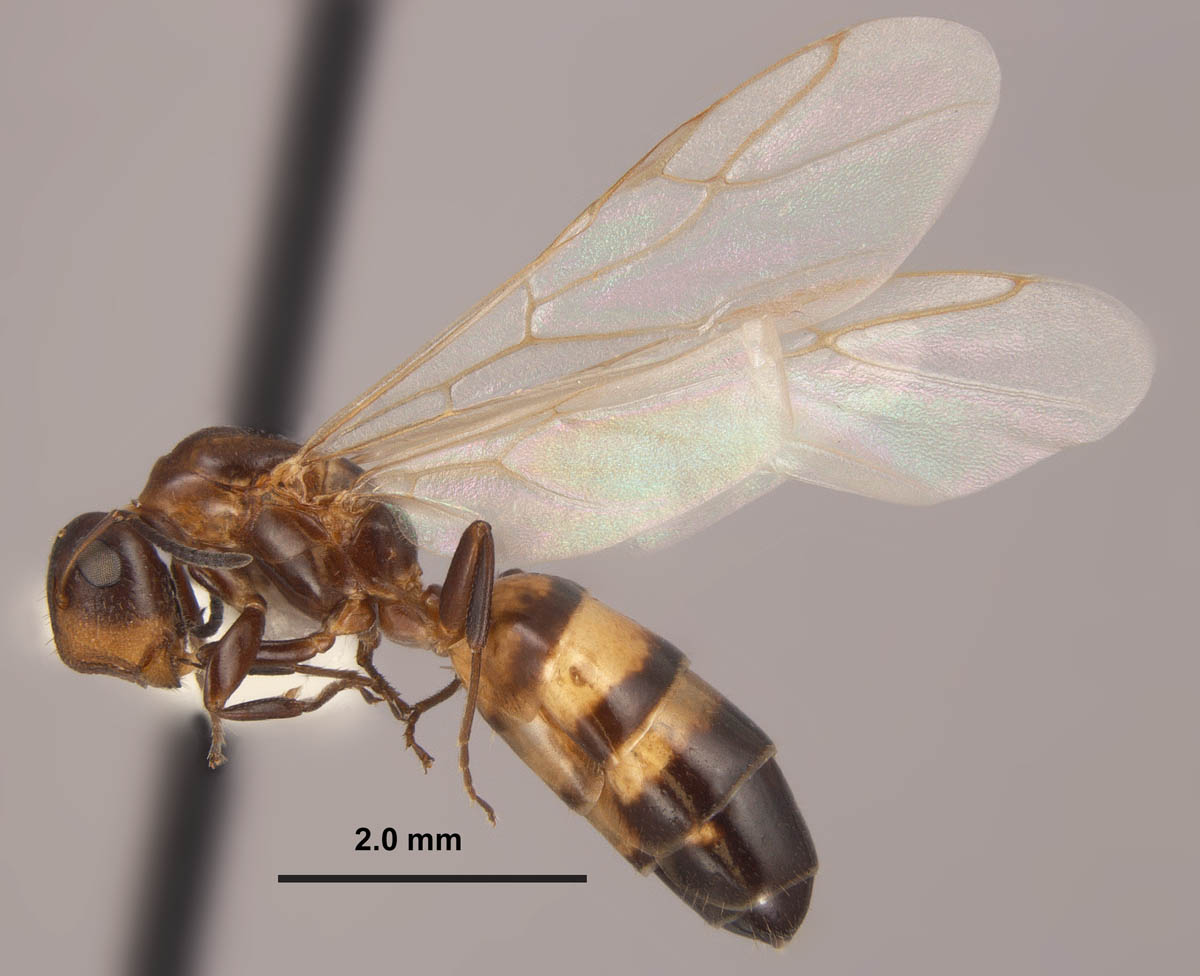
Colobopsis impressa, lateral view of a queen (MS, Oktibbeha Co.), (photo by Joe A. MacGown) |
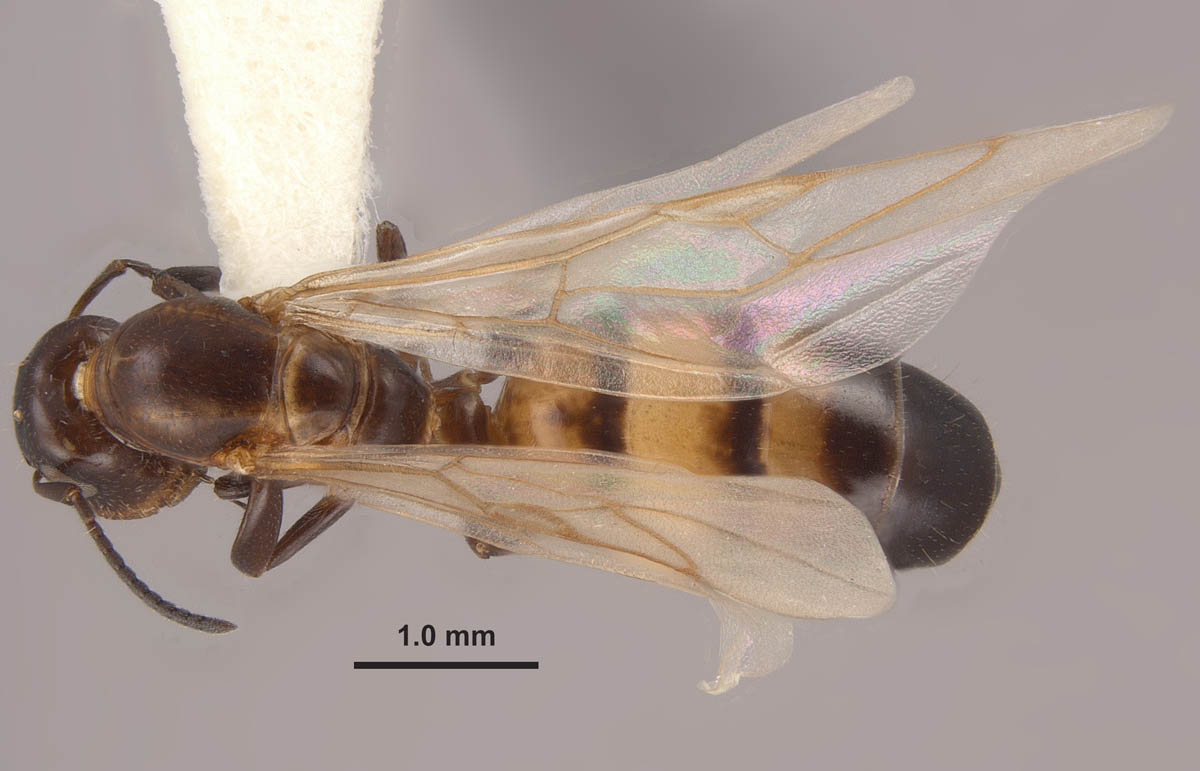
Colobopsis impressa, dorsal view of a queen (MS, Oktibbeha Co.), (photo by Joe A. MacGown) |
 |
 |
 |
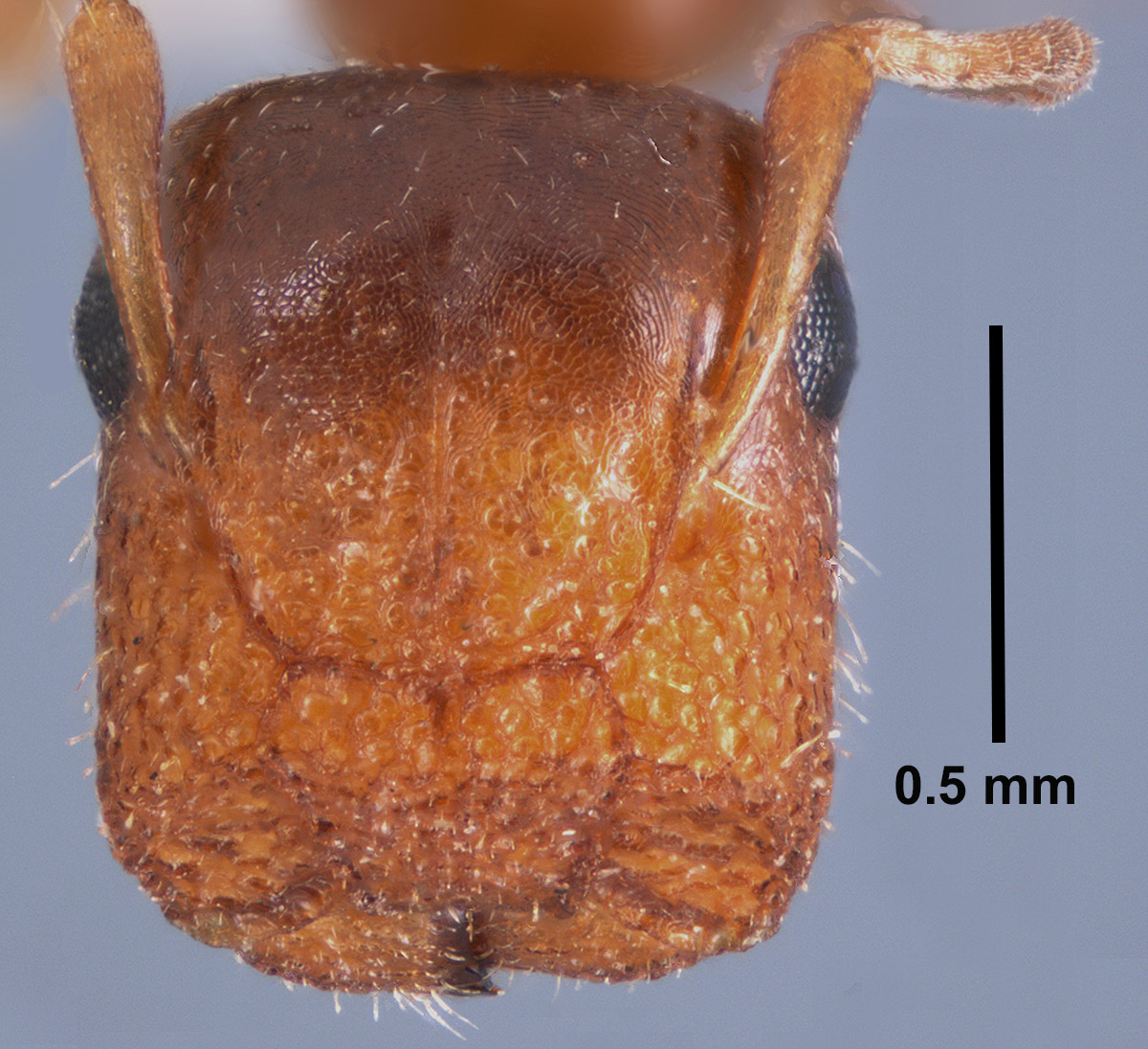
Colobopsis impressa, frontal view of the head of a major worker (photo by Joe A. MacGown) |
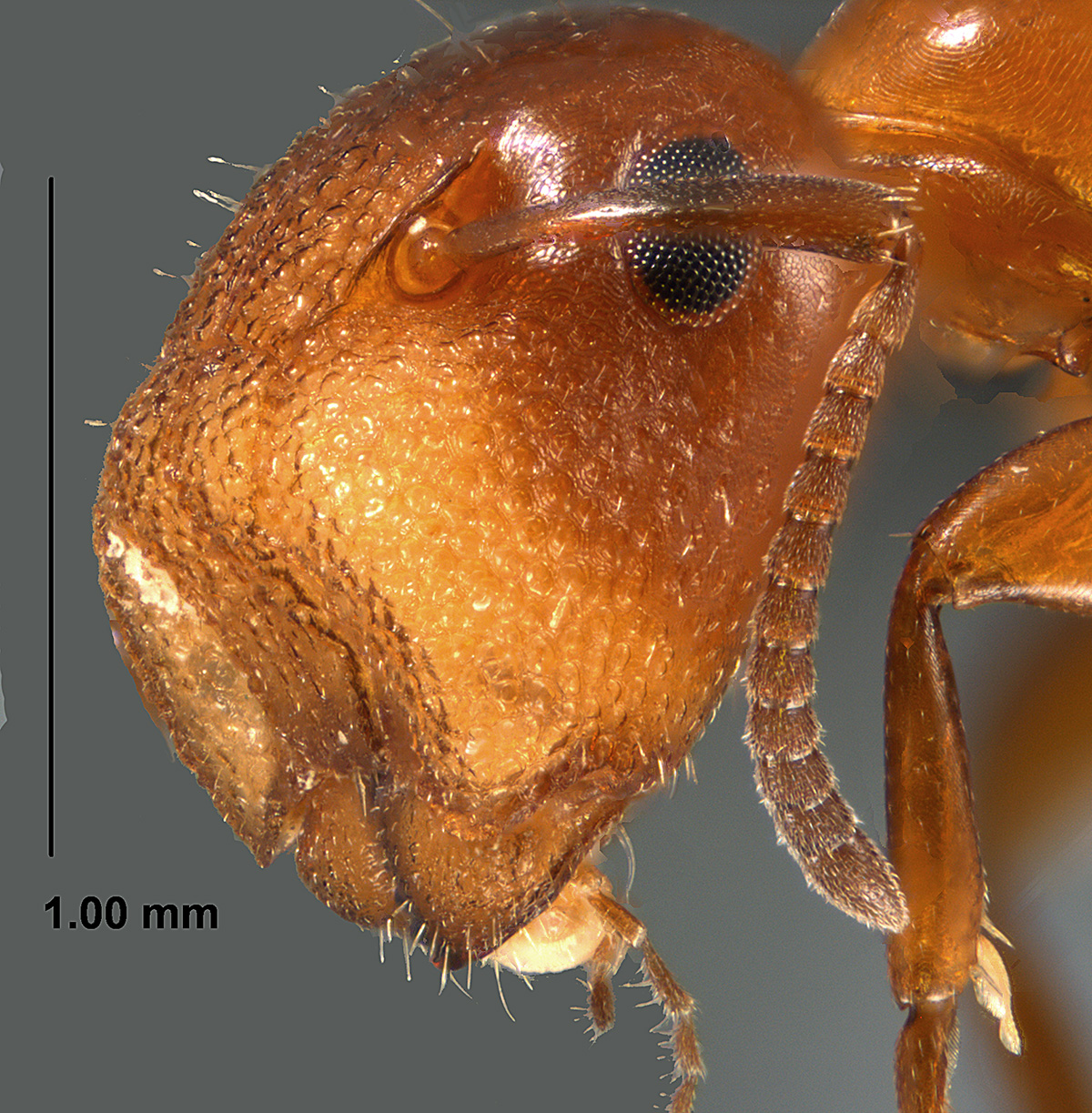
Colobopsis impressa, angled view of the head of a major worker (photo by Joe A. MacGown) |
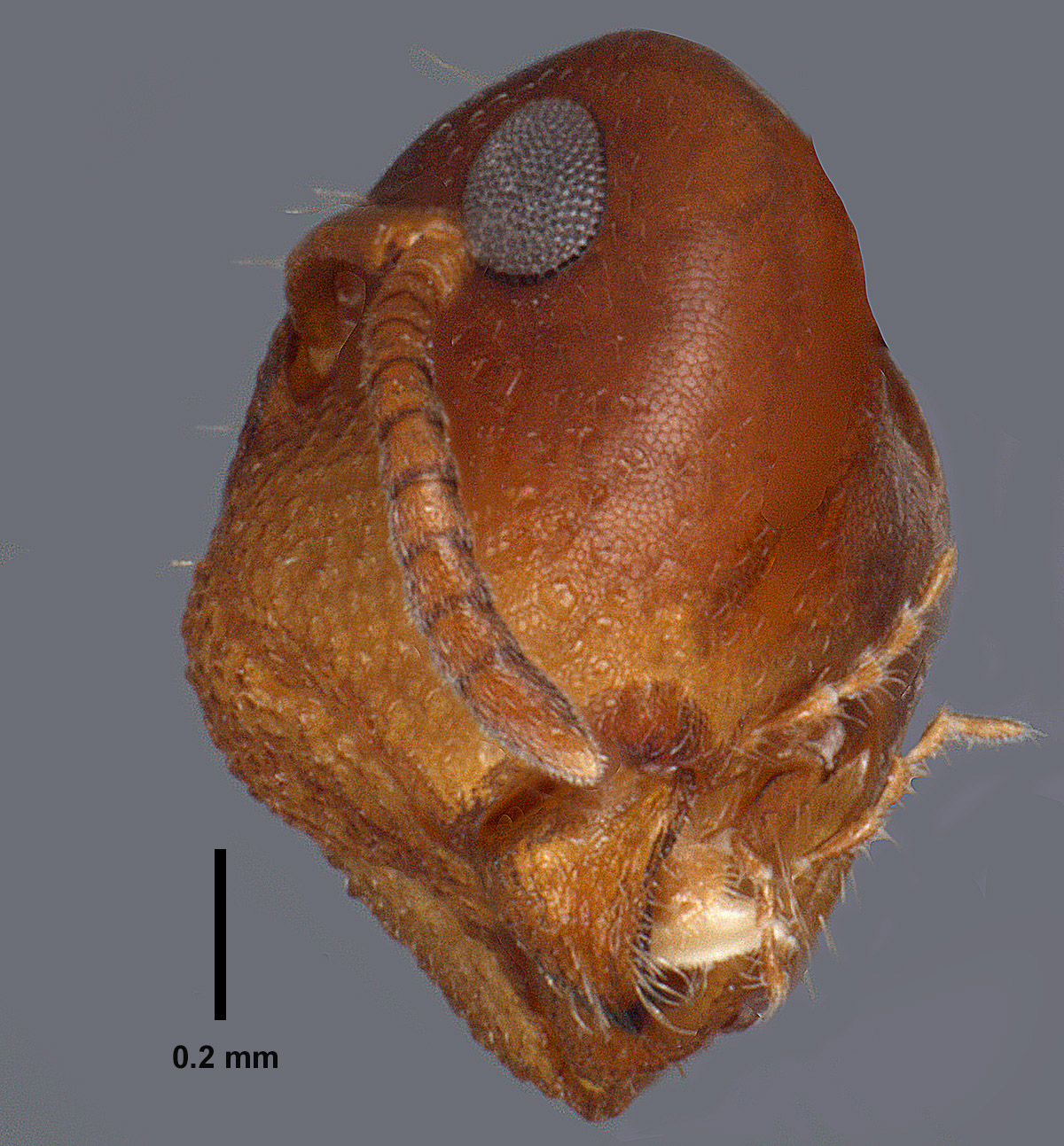
Colobopsis impressa, angled view of the head of a major worker (photo by Joe A. MacGown) |
Members of the genus Colobopsis can be recognized by the unusual modifications of the heads of both the major workers and queens which are severely truncated in the anterior third. This phragmotic condition enables the major workers to serve as living doors to their nests which are in living or dead twigs, stems, and some galls. Historically, this species has been confused with C. pylartes fraxinicola, which, according to Bill MacKay (http://www.utep.edu/leb/antgenera.htm), may not be a valid species. At this time I am going along with the idea that we have three species in the southeastern United States: C. impressa, C. mississippiensis, and C. obliqua. Diagnosis.Major worker: Small to medium sized (TL ≈ 4.5–5.5 mm); head large in proportion to body; head deeply concave, truncated surface of the head with the sides of the truncated area very sharp and well defined except in the posterior part of the clypeus; mesosoma arched in profile view but with noticeable sutures present; head, mesosoma and legs reddish to brown, waist and gaster darker brown; mesosoma and gaster with sparse pubescence; head with numerous short erect; scattered erect setae of varying lengths on cheeks (of majors); 12 antennomeres; eyes large, located above midline of head; propodeum angular in profile view; waist one-segmented; sting lacking, acidopore present. Minor worker. Similar to majors but smaller, head not truncate. Queen: Similar in appearance to workers, but larger; mesosoma enlarged; with wings or wing scars; head not as large proportionally as majors; eyes enlarged, ocelli present. Male: Small, mesosoma compact, winged, dark brownish, 13 antennomeres, eyes large, ocelli present. Similar species. Colobopsis impressa can be distinguished from our other two species in this region by metanotal suture of both the major and minor being deeply impressed; the propodeum of the majors usually rounded between faces (angulate in minors); and the angle of truncation of head of major and queen rounded to slightly serrate. In C. mississippiensis and C. obliqua, the metanotal suture of the majors and minors is only shallowly impressed and the propodeum of both majors and minors are angulate between faces. In C. mississippiensis, the angle where the truncation of the head occurs is very sharp with a pronounced rim or flange present and sculpture on the truncated face is very shallow and fine and somewhat shining in overall appearance. C. obliqua has a somewhat serrate, but distinct, ridge separating the truncated portion of the head with the rest of the head. The reticulations of C. obliqua are much larger and more numerous than in C. impressa. In addition, there are many more erect hairs present on the posterior region of the head C. obliqua majors than in C. impressa. Biology/Habitat. This is a widespread species in the Southeast where it nest in cavities. In MS, C. impressa has been found nesting in Carya glabra (Mill.) Sweet, Fraxinus americanus L., Solidago spp., and galls produced by the cynipid wasp Callirhytis cornigera (O. S. ) on Quercus falcata Michx. (from Tynes 1964). Tynes, recognized C. pylartes fraxinicola as a distinct species and valid species, however, his records were probably actually C. impressus. He found that species nesting in 21 species of plants in Mississippi including Fraxinus americanus L., Carya illinoensis (Wang.), Carya sp. (hickories), Quercus falcata Michx., Solidago spp., Rhus glabra L., Catalpa speciosa Warder, Berchemia scandens (Hill) K. Koch, Campsis radicans (L.), Sambucus canadensis L., Erianthus ravennae (L.) (plumegrass), Prunus persica (L.) Batsch, Melia azedarach L., Cornus florida L., Crataegus uniflora Meunchh., Ulmus americana L., Smilax sp., Maclura pomifera (Raf.) Schneid., Gleditsia triacanthos L., Vitis labrusca L., and Populus deltoides Marsh (from Tynes 1964). Pest Status. This species is not considered to be a structural, nuisance, or stinging/biting pest. |
||


MEM | Research Taxa | Introduction | Faunal Lists | Identification | How to Use the Keys | Glossary | Collecting Tips | Specimen Preparation MEM Publications | MEM Ant Publications | Ant Videos | Ant News | MEM Ant Blog | References | Acknowledgments | Links
Author-Joe MacGown: jmacgown@entomology.msstate.edu
The ant web site was uploaded on 6 March 2003 and was last updated on 11 September 2024
(specific pages may have different uploaded and updated dates)
Drawings and photographs by Joe MacGown (unless otherwise noted) and copyrighted by the Mississippi Entomological Museum
The development of this web site was supported in part by the National Institute of Food and Agriculture, United States Department of Agriculture, under Project No. MIS-012040 and the USDA-ARS Areawide Management of Imported Fire Ant Project (Richard L. Brown, Principal Investigator).