
Subfamily MYRMICINAE |
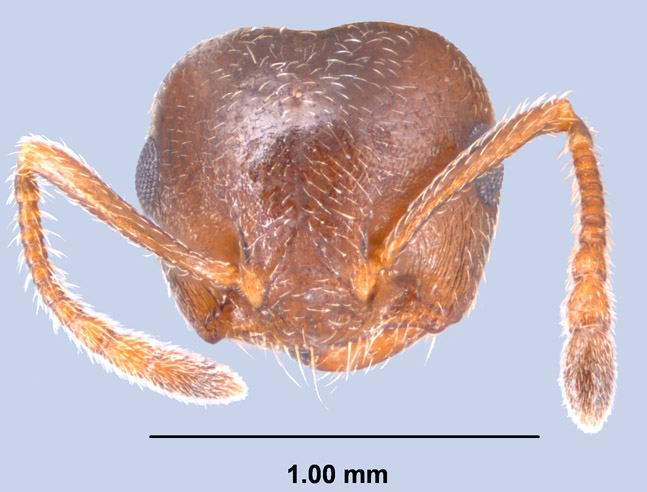 |
Crematogaster ashmeadi , full face view of worker (click image to enlarge).
|
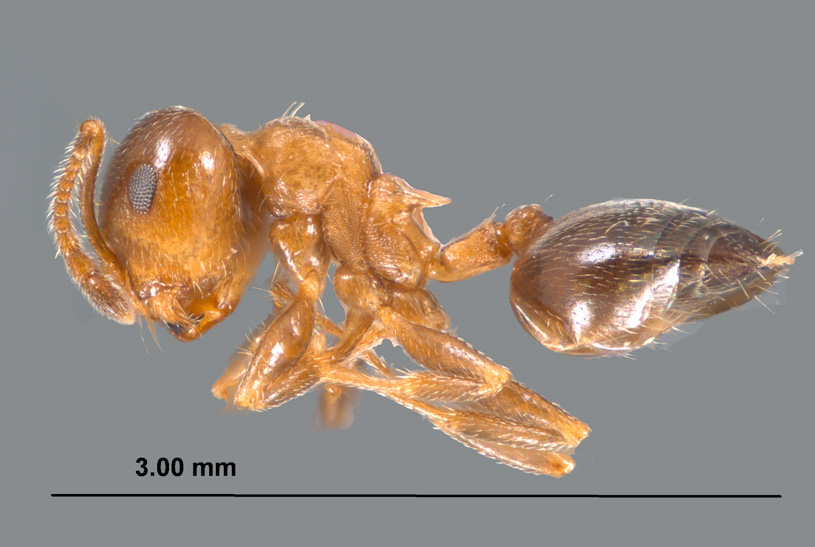 |
Crematogaster ashmeadi, profile view of a worker (click image to enlarge). |
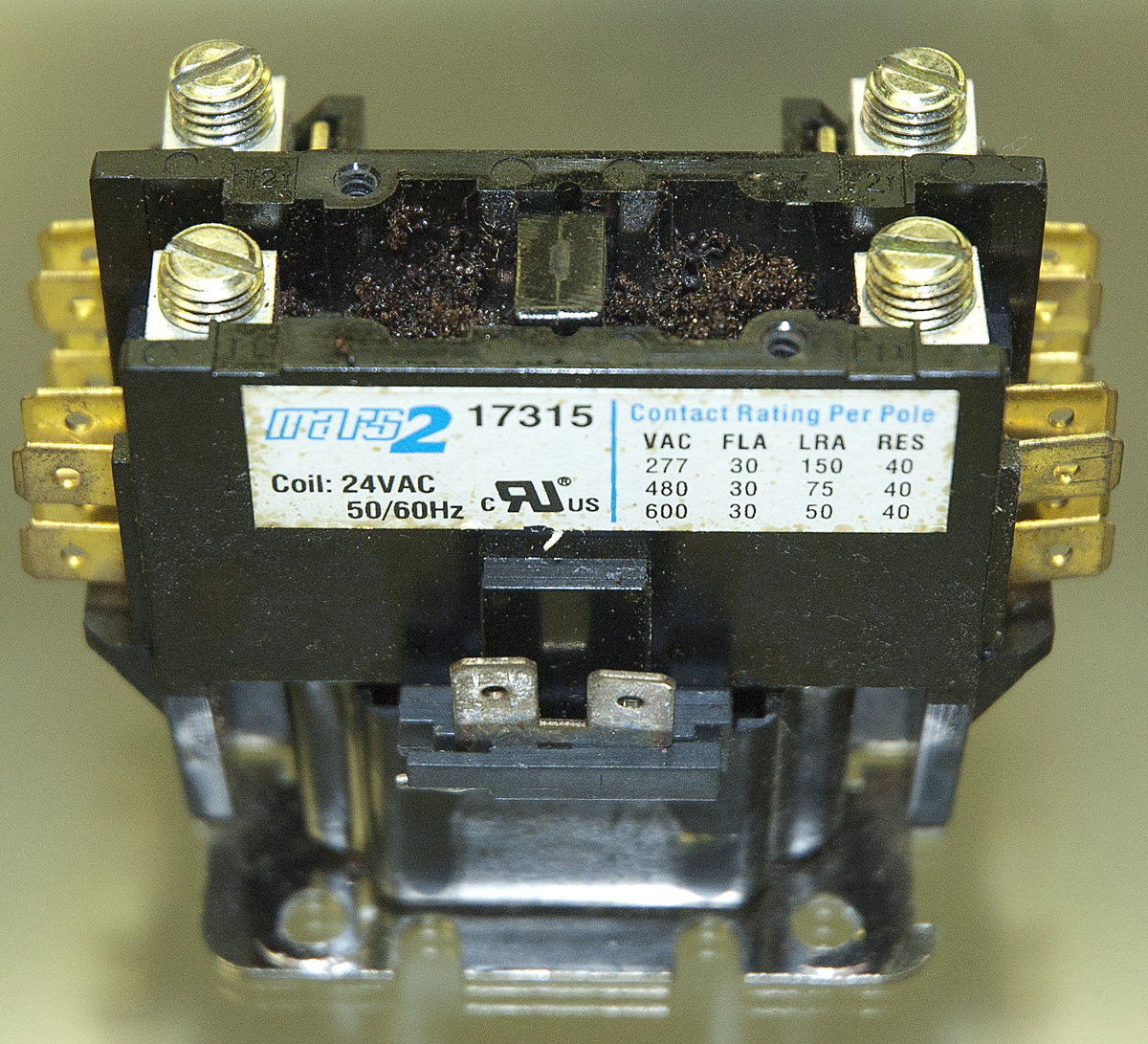 |
Air conditioner contactor relay that was shorted out by numerous Crematogaster ashmeadi workers (click image to enlarge). |
Introduction Diagnosis.Worker: Small, monomorphic (TL ≈ 2.5–3.0 mm), light brown to blackish; pronotal area with only a few erect setae present, which are confined to humeri; pronotal pleurae mostly unsculptured, smooth, reflective, and shiny; mesosoma with striate sculpture; head about as wide as long; 11, terminating in 3-segmented club; eyes located about midway on sides of head; propodeal spines present, short, inner margins parallel to the longitudinal body axis (in dorsal view); waist 2-segmented, petiole flattened, postpetiole attached to dorsal surface of gaster; gaster somewhat heart shaped and often upturned; sting present. Queen: Similar in appearance to workers, but larger (≈ 7.0 mm); mesosoma enlarged and flattened dorsally; with wings or wing scars; eyes enlarged, ocelli present. Male: Small (≈ 3.0 mm) winged, 13 antennomeres, dark brownish with a black head, head flattened, and eyes large, ocelli present. Similar species. Two other similar species are commonly found in the same habitats, C. lineolata and C. pilosa. Crematogaster lineolata is larger, with numerous stiff, erect setae on mesosoma; more sculptured; and has elongate propodeal spines. Crematogaster pilosa is bicolored orangish brown and brownish black, is shiny in overall appearance, has erect pubescence on the head, and has longer propodeal spines. Biology/Habitat. Ashmead’s acrobat ant is a widespread and common arboreal species in southeastern forests where it nests in trees, shrubs, vines, and various cavities in a wide variety of habitats. This widespread species is widespread in the Southeast. Pest Status. Occasional nuisance pest, can sting, but not a serious stinging pest. It is an occasional structural pest. This species has also been reported to damage insulation boards and cause short circuits in electrical equipment. Smith (1965) reported that C. ashmeadi damaged insulated board and hard fiberboard, and removed rubber insulation from telephone wires causing short circuits. In Mississippi, workers of this species short circuited an air conditioner contactor relay (see photo above). . Literature Cited |


MEM | Research Taxa | Introduction | Faunal Lists | Identification | How to Use the Keys | Glossary | Collecting Tips | Specimen Preparation MEM Publications | MEM Ant Publications | Ant Videos | Ant News | MEM Ant Blog | References | Acknowledgments | Links
Author-Joe MacGown: jmacgown@entomology.msstate.edu
The ant web site was uploaded on 6 March 2003 and was last updated on 11 September 2024
(specific pages may have different uploaded and updated dates)
Drawings and photographs by Joe MacGown (unless otherwise noted) and copyrighted by the Mississippi Entomological Museum
The development of this web site was supported in part by the National Institute of Food and Agriculture, United States Department of Agriculture, under Project No. MIS-012040 and the USDA-ARS Areawide Management of Imported Fire Ant Project (Richard L. Brown, Principal Investigator).